More About This Card
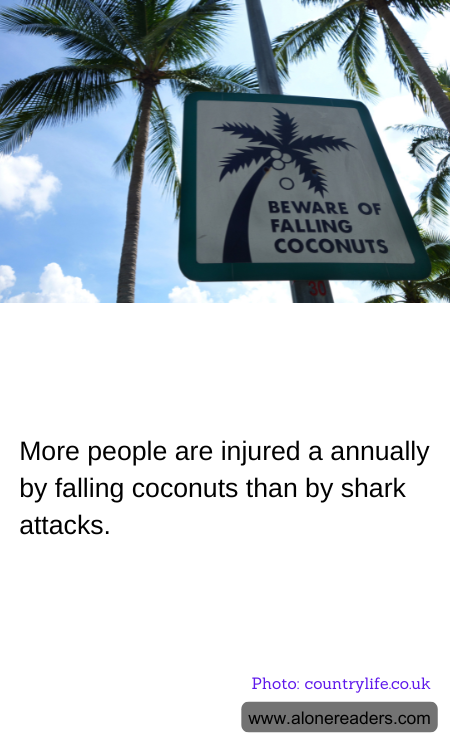
In the realm of unexpected dangers, the humble coconut has earned a surprising reputation. While the fear of shark attacks often looms large in the public imagination, statistics reveal a more mundane yet equally startling reality: more people are injured annually by falling coconuts than by shark attacks. This intriguing fact sheds light on the often-overlooked hazards of everyday life and challenges our perceptions of risk.
Coconuts, the tropical fruits that conjure images of idyllic beaches and refreshing drinks, can pose a significant threat when they fall from their lofty perches. Weighing up to four kilograms, a coconut can descend from heights of up to 30 meters, gaining considerable momentum before impact. This combination of weight and height can result in serious injuries, including concussions, fractures, and even fatalities. In contrast, shark attacks, though terrifying, are relatively rare occurrences. According to the International Shark Attack File, there are fewer than 100 unprovoked shark attacks worldwide each year, with only a handful resulting in fatalities.
The disparity between the perceived and actual risks of these two phenomena highlights the role of media and cultural narratives in shaping public fears. Sharks, often portrayed as menacing predators in films and literature, have become symbols of danger lurking beneath the ocean's surface. This portrayal has fueled a disproportionate fear of sharks, overshadowing more common risks like falling coconuts. In reality, the likelihood of encountering a shark is exceedingly low, especially when compared to the everyday presence of coconut trees in tropical regions.
Understanding the true nature of risks can lead to more informed decision-making and safety measures. In areas where coconut trees are prevalent, local authorities and communities have implemented strategies to mitigate the danger of falling coconuts. These measures include regular maintenance of coconut trees, such as trimming and harvesting, to prevent overripe coconuts from becoming hazardous projectiles. Additionally, warning signs and designated safe zones have been established in some tourist areas to protect visitors from potential accidents.
The comparison between coconut-related injuries and shark attacks serves as a reminder of the importance of context and perspective in assessing risks. While it is natural to fear the unknown and the dramatic, it is crucial to recognize the more mundane dangers that may lurk in our everyday environments. By acknowledging these risks and taking appropriate precautions, we can enjoy the beauty and bounty of nature without falling victim to its unexpected hazards.
In conclusion, the surprising statistic that more people are injured by falling coconuts than by shark attacks challenges our assumptions about danger and safety. It underscores the need to look beyond sensationalized fears and focus on practical measures to protect ourselves from the genuine risks we face. Whether strolling along a tropical beach or swimming in the ocean, awareness and preparedness are key to ensuring a safe and enjoyable experience.