More About This Card
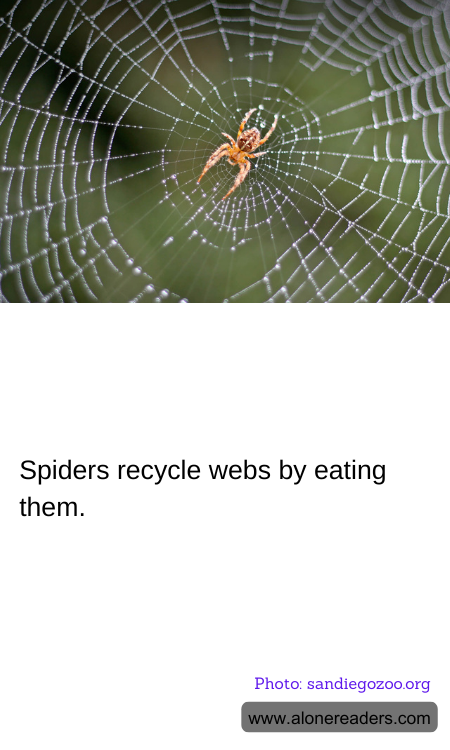
Spiders are fascinating creatures that have intrigued humans for centuries with their intricate web-spinning abilities. One of the most remarkable aspects of their behavior is their ability to recycle their webs by consuming them. This unique practice not only showcases the spider's resourcefulness but also highlights the intricate balance of nature.
Web-spinning is an energy-intensive process for spiders. The silk they produce is a protein-based material that requires a significant amount of energy to create. Given the high cost of production, it is no wonder that spiders have developed a method to conserve resources by eating their webs. This recycling process allows them to reclaim the proteins and other nutrients, which can then be used to spin new webs. This behavior is particularly beneficial for spiders that need to frequently rebuild their webs due to environmental factors such as wind, rain, or damage from prey.
The process of web consumption is not only about resource conservation but also about maintaining the web's effectiveness. Over time, a web can accumulate dust, pollen, and other debris, which can reduce its stickiness and effectiveness in capturing prey. By consuming the old web, spiders can clear away these impurities and produce a fresh, more efficient trap. This ensures that they maintain a high success rate in capturing food, which is crucial for their survival.
Moreover, the ability to recycle webs is an excellent example of nature's efficiency. It demonstrates how organisms can adapt to their environment in ways that maximize their survival while minimizing waste. This behavior is a testament to the evolutionary ingenuity of spiders, allowing them to thrive in various habitats around the world.
For many people, the idea of spiders eating their webs might seem unusual or even a bit unsettling. However, it is a natural and essential part of their life cycle. Understanding this behavior can help demystify these often-misunderstood creatures and foster a greater appreciation for the complex ecosystems they inhabit. By recognizing the role spiders play in controlling insect populations and maintaining ecological balance, we can better appreciate their presence in our world.
In conclusion, the practice of web recycling by spiders is a remarkable example of nature's resourcefulness. It highlights the intricate relationship between organisms and their environment and underscores the importance of conserving resources. As we continue to learn more about these fascinating creatures, we gain insights into the delicate balance of nature and the innovative strategies that have evolved to sustain life on Earth.