More About This Card
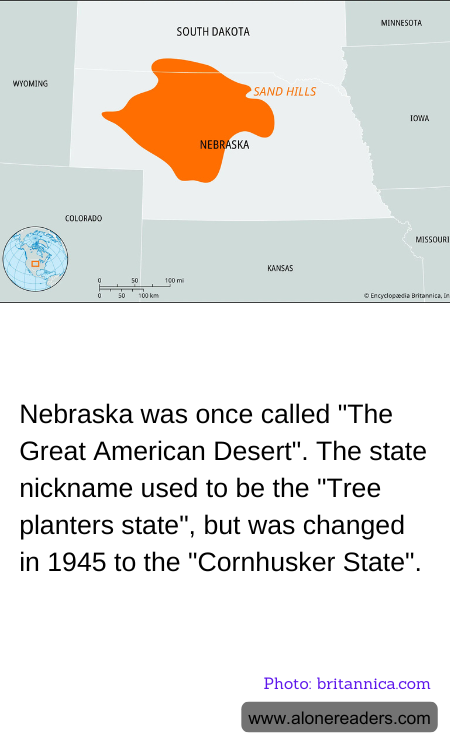
Nebraska, a state nestled in the heart of the United States, boasts a rich history that reflects its transformation from a seemingly barren land to a thriving agricultural hub. Once referred to as "The Great American Desert," Nebraska's early explorers and settlers encountered vast expanses of grasslands and prairies that seemed inhospitable and unyielding. This moniker, coined in the early 19th century, painted a picture of a land that was challenging to cultivate and settle, primarily due to its arid conditions and lack of trees.
However, the perception of Nebraska began to shift as settlers discovered the potential of its soil. The introduction of innovative farming techniques and irrigation transformed the landscape, revealing the state's true agricultural potential. This transformation was so profound that Nebraska earned the nickname "The Tree Planters State" in recognition of its efforts to cultivate trees and promote forestry. The establishment of Arbor Day in 1872 by J. Sterling Morton, a Nebraska resident, further cemented the state's commitment to tree planting and conservation. Arbor Day encouraged individuals and communities to plant trees, enhancing the environment and countering the earlier image of a desolate desert.
Despite its early reputation, Nebraska's identity continued to evolve, and in 1945, the state adopted a new nickname: "The Cornhusker State." This change reflected Nebraska's burgeoning agricultural industry, particularly its prominence in corn production. The term "Cornhusker" itself is derived from the method of harvesting corn by hand, a practice that was once widespread across the state. Corn became a symbol of Nebraska's agricultural success and resilience, representing the hard work and ingenuity of its farmers.
Today, Nebraska is renowned for its vast fields of corn and other crops, contributing significantly to the nation's food supply. The state's transformation from "The Great American Desert" to "The Cornhusker State" is a testament to the determination and innovation of its people. It highlights the ability to adapt and thrive in the face of challenging conditions, turning what was once perceived as a barren land into a cornerstone of American agriculture.
Nebraska's journey from a desert to a fertile agricultural powerhouse serves as an inspiring story of transformation and perseverance. It underscores the importance of vision, hard work, and the willingness to embrace change. As visitors explore Nebraska today, they are greeted by lush landscapes and vibrant communities, a far cry from the desolate image of the past. This evolution not only reflects the state's agricultural achievements but also its enduring spirit and commitment to growth and sustainability.