More About This Card
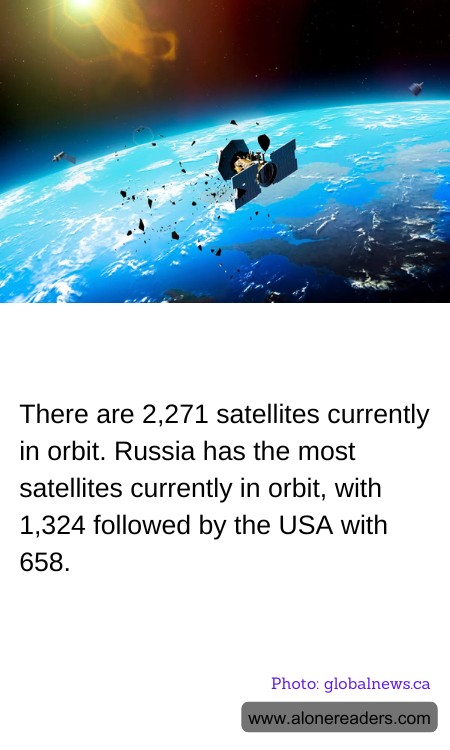
In the vast expanse of space surrounding our planet, thousands of satellites orbit the Earth, playing crucial roles in communication, navigation, weather forecasting, and scientific research. As of recent counts, there are approximately 2,271 satellites currently in orbit. These artificial satellites are the silent sentinels of modern technology, enabling a wide array of services that have become integral to daily life.
Interestingly, Russia leads the world in the number of satellites it has in orbit, boasting a fleet of 1,324. This impressive figure underscores Russia's long-standing commitment to space exploration and technology. Since the launch of Sputnik 1 in 1957, the first artificial satellite, Russia has been at the forefront of space technology. Today, its satellites serve various purposes, from military and intelligence operations to scientific research and telecommunications. The Russian space program continues to be a significant player on the global stage, contributing to international space missions and collaborations.
Following Russia, the United States holds the second-largest number of satellites in orbit, with 658. The United States has been a pioneer in space exploration, with NASA leading numerous groundbreaking missions that have expanded our understanding of the universe. American satellites are pivotal in global communications, GPS technology, and Earth observation. They also play a vital role in national security and defense. The U.S. space industry, driven by both government and private enterprises like SpaceX and Blue Origin, continues to innovate and expand its presence in space.
The presence of so many satellites from these two countries highlights the strategic importance of space in the modern world. Satellites are not just tools for scientific exploration; they are essential components of national infrastructure, influencing everything from international communications to climate monitoring. The data they provide is invaluable for understanding environmental changes, managing natural resources, and enhancing global connectivity.
As technology advances, the number of satellites in orbit is expected to grow. This expansion raises important questions about space traffic management and the sustainability of space activities. The increasing number of satellites also brings challenges such as space debris, which poses risks to both manned and unmanned space missions. International cooperation and regulation will be crucial in addressing these challenges to ensure that space remains a safe and accessible domain for future generations.
In conclusion, the current landscape of satellites in orbit reflects the dynamic and competitive nature of space exploration and technology. With Russia and the United States leading the charge, the future of satellite technology promises continued innovation and collaboration. As we look to the stars, these satellites remind us of the incredible achievements humanity has made and the potential that lies ahead in the final frontier.