More About This Card
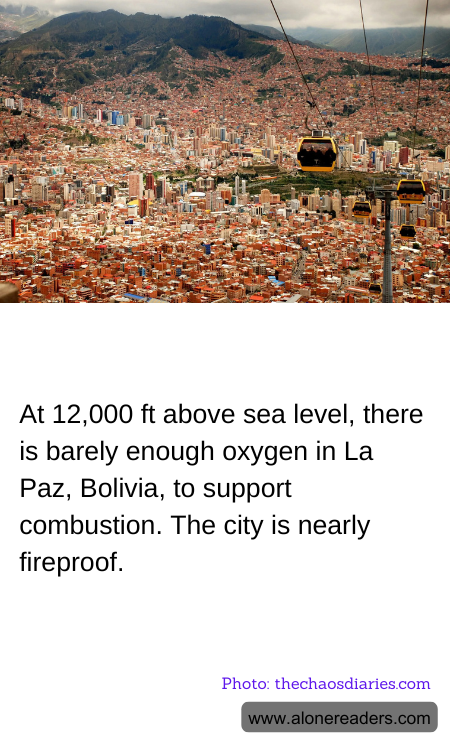
Nestled high in the Andes Mountains, La Paz, Bolivia, stands as one of the world's most unique cities, not just for its breathtaking views and vibrant culture, but also for its remarkable resistance to fire. At an astonishing altitude of approximately 12,000 feet above sea level, La Paz experiences a phenomenon that is both scientifically fascinating and practically advantageous: the air is so thin that it barely supports combustion, rendering the city nearly fireproof.
The science behind this natural fire resistance lies in the reduced oxygen levels at such high altitudes. Oxygen is a critical component for combustion, and at sea level, it makes up about 21% of the atmosphere. However, as one ascends to higher elevations, the air becomes less dense, and the concentration of oxygen decreases significantly. In La Paz, the oxygen level is about 30% lower than at sea level. This scarcity of oxygen means that fires, which require a certain amount of oxygen to ignite and sustain themselves, struggle to catch and spread.
For the residents of La Paz, this unique characteristic offers a significant safety advantage. While urban fires can be devastating in many parts of the world, the risk is considerably lower in this high-altitude city. Buildings and homes are less likely to succumb to accidental fires, providing a sense of security that is rare in densely populated urban areas. This natural fire deterrent is a boon for city planners and residents alike, allowing them to focus on other aspects of urban safety and development.
However, the thin air presents its own set of challenges. For newcomers and tourists, the reduced oxygen levels can lead to altitude sickness, characterized by symptoms such as headaches, dizziness, and shortness of breath. Acclimatization is key, and visitors are often advised to take it slow upon arrival, allowing their bodies to adjust to the lower oxygen levels. Despite these challenges, the allure of La Paz, with its rich history, vibrant markets, and stunning landscapes, continues to draw people from around the globe.
In addition to its natural fire resistance, La Paz is a city of contrasts and surprises. It is a place where traditional indigenous culture meets modern urban life, where bustling markets coexist with serene mountain vistas. The city's unique geographical and atmospheric conditions have shaped not only its architecture and infrastructure but also the daily lives of its inhabitants.
La Paz stands as a testament to human adaptability and resilience. Its nearly fireproof nature is just one of the many fascinating aspects that make it a city like no other. As the world continues to grapple with the challenges of urbanization and climate change, La Paz offers a glimpse into how natural conditions can influence and enhance urban living, providing lessons that are as valuable as they are intriguing.