More About This Card
In the realm of nature's wonders, honey bees have long been celebrated for their role in pollination and honey production. However, these industrious insects are now being recognized for a rather unexpected talent: their ability to detect explosives. This remarkable skill is being harnessed to address a critical global issue—landmines.
Landmines, remnants of past conflicts, pose a significant threat to civilians in many parts of the world. These hidden dangers can remain active for decades, causing injury and death long after wars have ended. Traditional methods of landmine detection, such as metal detectors and trained dogs, are effective but can be costly and time-consuming. Enter the honey bee, a surprising yet promising ally in the quest to make the world safer.
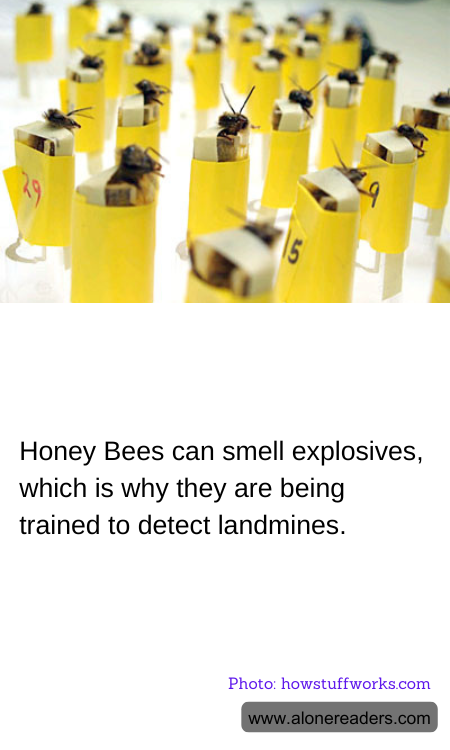
The secret to the honey bee's explosive-detecting prowess lies in its extraordinary sense of smell. Bees have a highly developed olfactory system, which they use to locate flowers and communicate with each other. Scientists have discovered that this acute sense of smell can be trained to recognize the scent of explosives, such as TNT. By associating the smell of explosives with a food reward, bees can be conditioned to seek out these dangerous substances.
Training bees to detect explosives involves a process similar to Pavlovian conditioning. Researchers expose bees to the scent of explosives and simultaneously offer them a sugar solution as a reward. Over time, the bees learn to associate the smell with the reward, prompting them to seek out the scent in hopes of finding food. This method has proven effective in controlled environments, and efforts are underway to refine the technique for field use.
The advantages of using honey bees for landmine detection are numerous. Bees are small, lightweight, and can cover large areas quickly. They are also less expensive to train and deploy than traditional methods. Moreover, bees do not trigger landmines, making them a safe option for detection. This innovative approach not only enhances safety but also offers a sustainable and environmentally friendly solution to a persistent problem.
While the concept of using bees to detect landmines is still in its developmental stages, early results are promising. Researchers are optimistic that with further refinement, bees could become a valuable tool in humanitarian demining efforts. This initiative not only highlights the versatility of honey bees but also underscores the potential of leveraging natural abilities to solve human challenges.
As we continue to explore the capabilities of these remarkable insects, the hope is that one day, honey bees will play a pivotal role in creating a safer world, free from the hidden perils of landmines. This innovative use of nature's tiny pollinators serves as a testament to the power of scientific ingenuity and the endless possibilities that arise when we look to the natural world for solutions.