More About This Card
In the vast tapestry of ancient Roman culture, where symbolism and superstition often intertwined with daily life, certain physical traits were imbued with significant meaning. One such trait was the crooked nose, which, rather intriguingly, was considered a sign of leadership and strength. This belief, rooted in the complex social and cultural fabric of Rome, offers a fascinating glimpse into how the Romans perceived power and authority.
The Romans, much like other ancient civilizations, were keen observers of human nature and often sought to interpret physical characteristics as indicators of personality and destiny. A crooked nose, in particular, was thought to signify a person of strong character and resilience. This perception likely stemmed from the association of a crooked nose with warriors and soldiers who had sustained injuries in battle. In a society that revered military prowess and valor, a nose that bore the marks of combat was seen as a badge of honor, suggesting that its owner had faced adversity and emerged victorious.
Moreover, the Roman emphasis on the virtues of courage and leadership further reinforced the notion that a crooked nose was a desirable trait. Leaders were expected to be not only strategic and wise but also physically robust and capable of enduring hardship. A crooked nose, therefore, became a symbol of these qualities, embodying the ideal of a leader who was both formidable and experienced. This belief was so pervasive that it transcended the boundaries of class and status, with both the elite and common citizens subscribing to the idea.
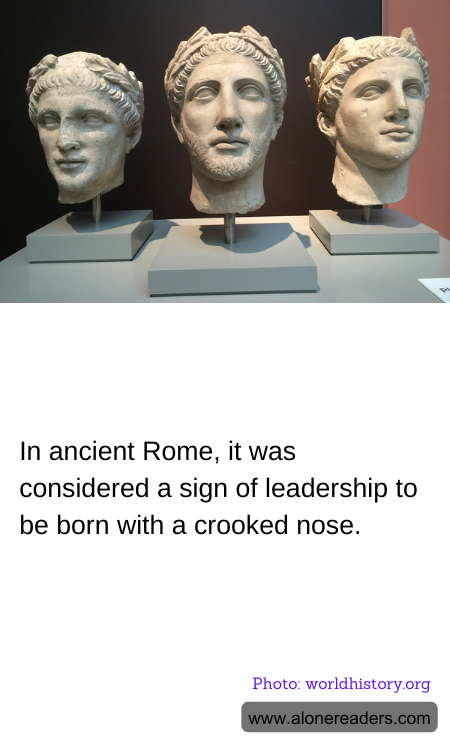
The cultural significance of the crooked nose also found its way into Roman art and literature. Statues and busts of notable leaders and deities often depicted them with pronounced or slightly crooked noses, emphasizing their strength and authority. These artistic representations served as a visual reinforcement of the societal values that esteemed such physical traits. In literature, too, descriptions of characters with crooked noses were often accompanied by narratives of their bravery and leadership, further cementing the association in the public consciousness.
While the notion of a crooked nose as a sign of leadership might seem peculiar to modern sensibilities, it underscores the broader Roman belief in the interconnectedness of physical appearance and personal attributes. It reflects a time when the external was seen as a mirror of the internal, and where the scars of battle were not merely blemishes but marks of distinction and honor.
In contemporary times, the idea of associating leadership with physical traits has largely faded, giving way to a more nuanced understanding of what makes a great leader. However, the Roman belief in the crooked nose as a symbol of leadership remains a captivating reminder of how cultural values and perceptions can shape societal norms and ideals. It invites us to reflect on the ways in which we, too, might unconsciously attribute certain qualities to physical appearances, and how these perceptions continue to evolve over time.