More About This Card
In the bustling metropolis of Tokyo, where the population density is among the highest in the world, the daily commute can be an extraordinary experience. Amidst the sea of people navigating the city's extensive rail network, there exists a unique profession that might seem unusual to outsiders but is essential to maintaining the flow of the city's daily life. This profession is known as the "pusher," and it plays a crucial role in managing the overwhelming crowds during rush hour.
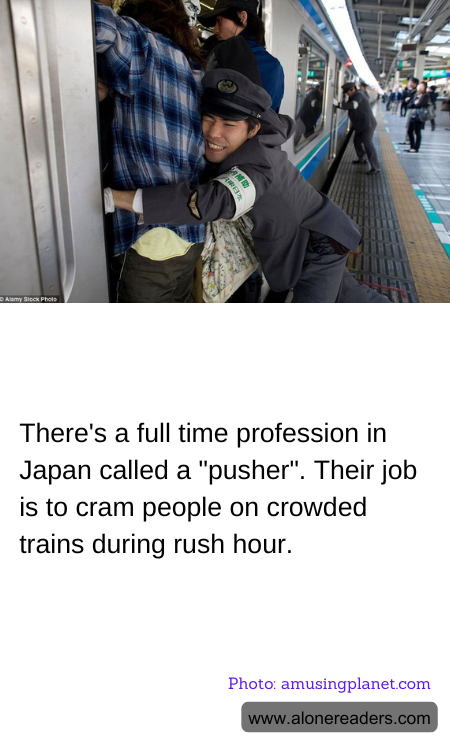
Pushers, or "oshiya" in Japanese, are employed by railway companies to ensure that as many passengers as possible can board the trains during peak commuting times. The job of a pusher is straightforward yet demanding: they are responsible for gently but firmly pushing passengers into the train cars to maximize space and ensure the doors can close. This role is particularly vital in Tokyo, where trains are often filled to over 200% capacity during the busiest hours.
The concept of pushers originated in the 1950s when Japan's rapid economic growth led to an increase in urban population and, consequently, a surge in train ridership. As the number of commuters swelled, the need for a systematic approach to manage the crowds became apparent. Initially, railway station staff performed this task, but as the demand grew, dedicated pushers were hired to handle the situation more efficiently.
Despite the seemingly intrusive nature of their work, pushers are trained to perform their duties with care and respect. They are taught to be mindful of passengers' safety and comfort, ensuring that no one is harmed or inconvenienced more than necessary. The pushers' presence is a testament to Japan's commitment to punctuality and efficiency, as trains are expected to run on time regardless of the number of passengers.
The role of a pusher is not without its challenges. It requires physical stamina, patience, and the ability to remain calm under pressure. Pushers must navigate the delicate balance between being assertive enough to fit everyone on board and gentle enough to avoid causing discomfort. Their work is a testament to the cultural emphasis on harmony and cooperation, as both pushers and passengers work together to achieve a common goal.
While the concept of pushers might seem peculiar to those unfamiliar with Japan's public transportation system, it highlights the country's innovative approach to problem-solving and its dedication to maintaining order in even the most crowded environments. For many commuters, the presence of pushers is a reassuring sign that, despite the chaos of rush hour, there is a system in place to ensure everyone reaches their destination on time.
In a city where space is at a premium and time is of the essence, the role of the pusher is a fascinating example of how Japan has adapted to the challenges of urban life. It serves as a reminder of the lengths to which societies will go to maintain efficiency and order, even in the face of overwhelming crowds.