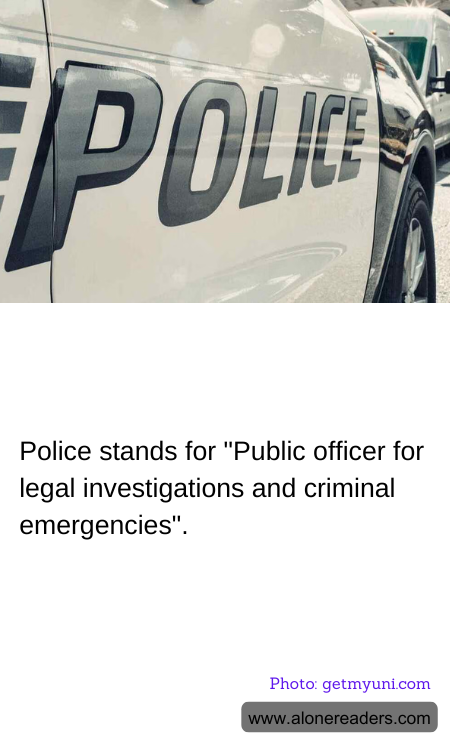
More About This Card
The term "police" is often associated with the uniformed officers who patrol our streets, maintain order, and ensure public safety. However, the acronym "Police" can be expanded to stand for "Public Officer for Legal Investigations and Criminal Emergencies," which encapsulates the multifaceted role these officers play in society. This expanded definition highlights the critical responsibilities and the diverse skill set required to effectively serve and protect communities.
At the core of policing is the responsibility for legal investigations. Police officers are trained to gather evidence, interview witnesses, and piece together the facts of a case to solve crimes. This aspect of their role requires a keen eye for detail, analytical thinking, and a thorough understanding of the law. Officers must be adept at navigating complex legal frameworks to ensure that investigations are conducted lawfully and that the rights of all individuals involved are respected. This commitment to legal integrity is vital in maintaining public trust and upholding the justice system.
In addition to investigations, police officers are first responders to criminal emergencies. Whether it's a burglary in progress, a domestic dispute, or a public disturbance, officers are often the first on the scene, tasked with assessing the situation and taking appropriate action. This requires not only physical courage but also the ability to remain calm under pressure and make quick, informed decisions. The role of police in emergencies extends beyond immediate response; they also provide reassurance to the public, offering a sense of security and stability in times of crisis.
Moreover, police officers serve as public officers, which underscores their role as servants of the community. They engage in community policing efforts, building relationships with residents to foster trust and cooperation. This proactive approach helps to prevent crime and address issues before they escalate into emergencies. By working closely with community members, police can better understand the unique challenges and needs of the areas they serve, tailoring their efforts to promote safety and well-being.
The acronym "Police" as "Public Officer for Legal Investigations and Criminal Emergencies" serves as a reminder of the diverse and demanding nature of police work. It highlights the balance officers must maintain between enforcing the law, responding to emergencies, and building community relations. As society evolves, so too does the role of the police, adapting to new challenges and technologies while remaining steadfast in their commitment to public service. Understanding this broader definition helps to appreciate the dedication and professionalism required to fulfill these duties, ensuring that police officers continue to be a vital pillar of our communities.