More About This Card
Nestled in the heart of Pennsylvania, Pittsburgh is a city renowned for its rich industrial history, vibrant cultural scene, and passionate sports fans. However, one of its most distinctive features is its unique English dialect, affectionately known as Pittsburghese. This regional vernacular is a linguistic tapestry that reflects the city’s diverse heritage and the close-knit communities that have shaped its character over the years.
Pittsburghese is more than just an accent; it is a collection of words and phrases that are unique to the Steel City. This dialect has evolved from the influences of the various immigrant groups that settled in the area, including Germans, Scots-Irish, and Eastern Europeans. These cultural influences have blended over time, creating a speech pattern that is both distinctive and endearing. For instance, Pittsburghers often refer to themselves as "Yinzers," a term derived from the word "yinz," which is the local equivalent of "you all" or "y'all." This term is emblematic of the city’s communal spirit and is a staple in the lexicon of Pittsburghese.
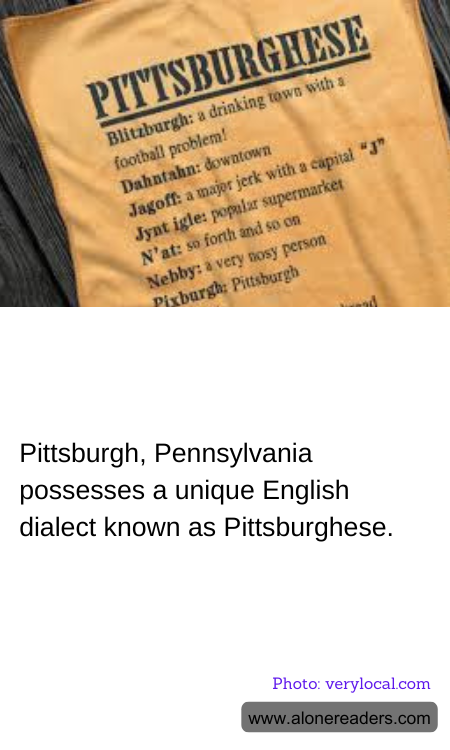
The pronunciation in Pittsburghese is also noteworthy. The dialect is characterized by its unique vowel sounds and the tendency to drop certain consonants. For example, the word "downtown" is often pronounced as "dahntahn," and "steel" might sound more like "still." These phonetic quirks give the dialect its distinctive sound, which can be both charming and perplexing to outsiders. Additionally, Pittsburghese includes a variety of colloquial expressions that are unfamiliar to those outside the region. Words like "nebby" (meaning nosy), "jagoff" (a mild insult), and "redd up" (to clean up) are just a few examples of the colorful vocabulary that enriches this dialect.
The preservation of Pittsburghese is a testament to the city’s pride in its local culture. Despite the homogenizing effects of media and technology, Pittsburghers continue to embrace their linguistic heritage. The dialect is celebrated in local literature, music, and even merchandise, with T-shirts and mugs proudly displaying Pittsburghese phrases. This cultural pride is further evidenced by the Pittsburghese Dictionary, a humorous yet informative guide that helps newcomers and visitors navigate the city’s unique speech.
In recent years, Pittsburghese has gained recognition beyond the city’s borders, thanks in part to the internet and social media. Videos and memes showcasing the dialect have gone viral, introducing a global audience to the quirks of Pittsburgh speech. This exposure has sparked interest and curiosity, drawing attention to the rich cultural tapestry that defines Pittsburgh.
In conclusion, Pittsburghese is more than just a way of speaking; it is a symbol of the city’s identity and resilience. It reflects the history, diversity, and camaraderie of Pittsburgh’s people. As the city continues to evolve, Pittsburghese remains a cherished reminder of its roots, a linguistic emblem of a community that values its past while looking toward the future. Whether you’re a native Yinzer or a curious visitor, the charm of Pittsburghese is sure to leave a lasting impression.