More About This Card
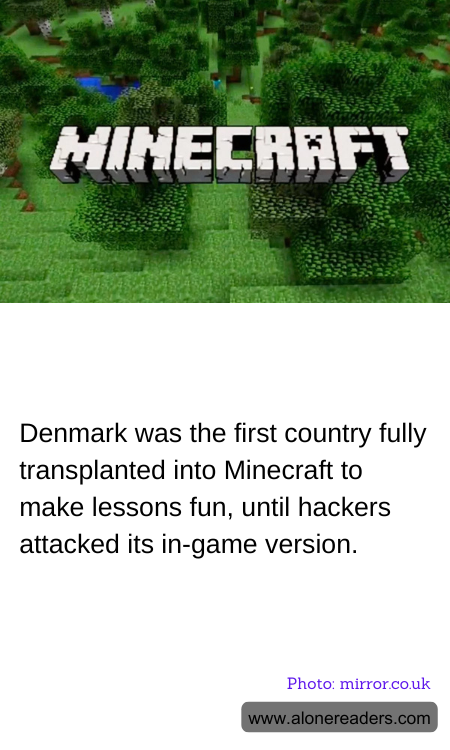
In an innovative blend of education and technology, Denmark became the first country to be fully recreated in the virtual world of Minecraft. This ambitious project was designed to make learning more engaging and interactive for students. By leveraging the popular sandbox game, educators aimed to provide a unique platform where students could explore the geography, history, and culture of Denmark in a digital environment that encourages creativity and collaboration.
The project, initiated by the Danish Geodata Agency, meticulously recreated the entire country using detailed geographical data. This virtual Denmark allowed students to explore everything from the bustling streets of Copenhagen to the serene landscapes of the Danish countryside. The digital replica was not only a marvel of modern technology but also a testament to the potential of video games as educational tools. Teachers could guide students through virtual field trips, assign tasks that required problem-solving skills, and even encourage students to build their own structures, fostering a hands-on learning experience.
However, the project faced an unexpected challenge when hackers targeted the in-game version of Denmark. These cyber intruders wreaked havoc by planting virtual explosives and altering the landscape, transforming the meticulously crafted digital environment into a chaotic scene. The attack highlighted the vulnerabilities of digital platforms and the need for robust security measures, even in educational settings. Despite the setback, the incident did not deter the project's creators, who viewed it as a learning opportunity to improve the security and resilience of future educational initiatives.
The Danish Minecraft project serves as a pioneering example of how digital tools can be harnessed to enhance educational experiences. It underscores the importance of integrating technology into the classroom in ways that are both innovative and secure. While the hacking incident was a setback, it also sparked discussions about digital citizenship and the responsibilities that come with creating and maintaining virtual spaces.
Ultimately, the project demonstrated the potential of Minecraft as more than just a game. It became a platform for learning, exploration, and creativity, inspiring educators worldwide to consider how similar approaches could be applied in their own classrooms. As technology continues to evolve, projects like Denmark in Minecraft pave the way for a future where education is not confined to traditional methods but is enriched by the endless possibilities of the digital world.