More About This Card
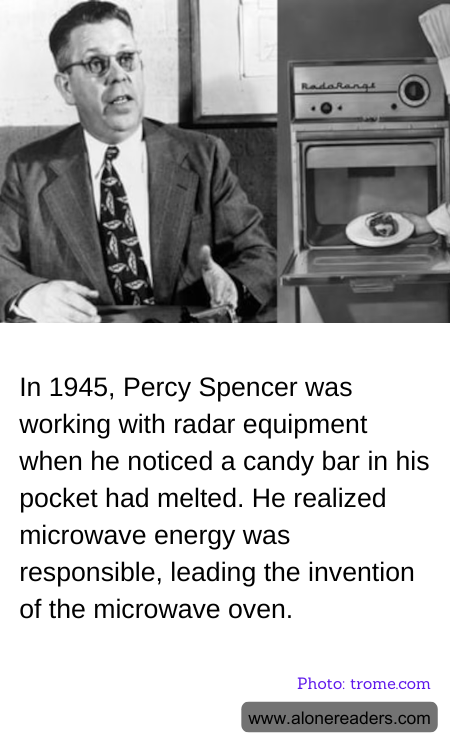
In the year 1945, a serendipitous discovery by Percy Spencer, an engineer working with radar technology, led to a revolutionary invention that would transform kitchens around the world: the microwave oven. Spencer was employed at Raytheon, a company heavily involved in developing radar systems during World War II. While working with magnetrons, which are vacuum tubes that generate microwave radiation, Spencer noticed an unexpected phenomenon. A candy bar in his pocket had melted, sparking his curiosity and setting the stage for a groundbreaking innovation.
Intrigued by this occurrence, Spencer began to experiment with the microwave energy emitted by the magnetron. He placed popcorn kernels near the device, and to his amazement, they began to pop. This was a clear indication that the microwaves were capable of heating food quickly and efficiently. Recognizing the potential of this discovery, Spencer and his team at Raytheon set out to harness this energy for cooking purposes, leading to the development of the first microwave oven.
The initial prototype, known as the "Radarange," was a far cry from the compact appliances we are familiar with today. It stood over six feet tall and weighed nearly 750 pounds. Despite its size, the Radarange was a marvel of modern technology, capable of cooking food in a fraction of the time required by conventional ovens. However, its commercial viability was limited due to its size and cost, which was prohibitively expensive for most households.
Over the following decades, advancements in technology allowed for the miniaturization and cost reduction of microwave ovens. By the 1970s, they had become a staple in kitchens across America and eventually around the world. The convenience and speed of microwave cooking revolutionized meal preparation, offering a quick and easy way to heat and cook food. It also paved the way for the development of microwave-safe containers and a variety of pre-packaged meals designed specifically for microwave cooking.
Percy Spencer's accidental discovery not only changed the way we cook but also highlighted the importance of curiosity and experimentation in scientific advancement. His ability to recognize the potential of a seemingly mundane event led to an invention that has had a lasting impact on daily life. Today, the microwave oven is an indispensable tool in homes, offices, and restaurants, a testament to the power of innovation and the unexpected paths it can take.