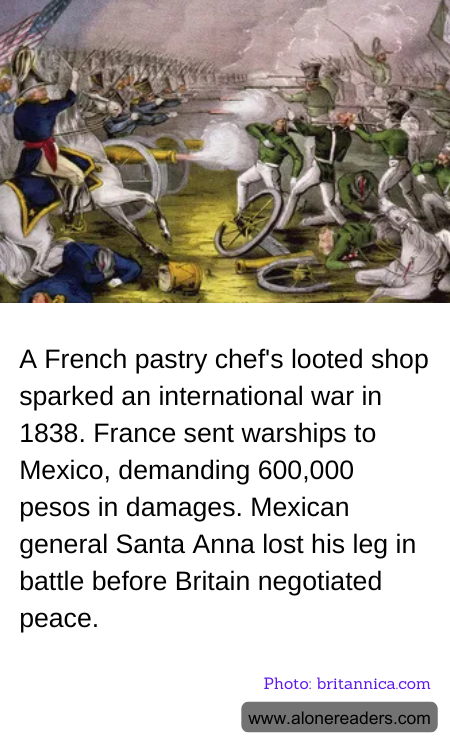
More About This Card
In the annals of history, few incidents are as peculiar as the conflict that erupted between France and Mexico in 1838, known as the Pastry War. This unusual confrontation was ignited by an unlikely catalyst: the looting of a French pastry chef's shop in Mexico City. The pastry chef, known as Monsieur Remontel, claimed that his establishment had been ransacked by Mexican officers in 1828, resulting in significant financial losses. When his appeals for compensation went unanswered by the Mexican government, Remontel sought the intervention of the French government, setting the stage for an international dispute.
France, under King Louis-Philippe, took the pastry chef's grievances seriously. Viewing it as an affront to French nationals and their property abroad, the French government demanded 600,000 pesos in damages from Mexico—a sum that far exceeded the actual losses incurred by Remontel. When Mexico refused to comply, France dispatched a fleet of warships to the Gulf of Mexico in 1838, blockading key ports and escalating tensions between the two nations.
The situation quickly deteriorated into armed conflict. Mexican forces, led by the formidable General Antonio López de Santa Anna, engaged the French in a series of skirmishes. During one of these battles, Santa Anna suffered a severe injury, resulting in the amputation of his leg. This personal loss would later become a symbol of his dedication to the Mexican cause, though it did little to alter the course of the conflict at the time.
As the war dragged on, it became clear that a resolution was needed to prevent further escalation. Enter Britain, which played a crucial role in mediating peace between the two nations. Through diplomatic negotiations, a settlement was reached in early 1839. Mexico agreed to pay the demanded compensation, albeit reluctantly, and the French forces withdrew, bringing an end to the brief but intense conflict.
The Pastry War, while seemingly trivial in its origins, had significant implications. It highlighted the vulnerabilities of nations to foreign intervention over seemingly minor disputes and underscored the complexities of international diplomacy in the 19th century. For Mexico, it was a stark reminder of the challenges it faced in maintaining sovereignty and stability in the face of foreign pressures. For France, it was a demonstration of its willingness to protect its citizens' interests abroad, even at the cost of military engagement.
Today, the Pastry War stands as a curious footnote in history, a testament to how a single incident involving a pastry chef could spark an international conflict. It serves as a reminder of the unpredictable nature of international relations and the enduring impact of seemingly small events on the global stage.