More About This Card
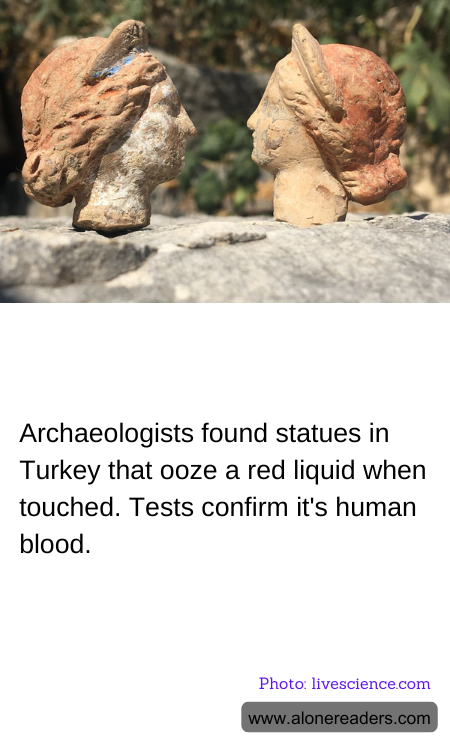
In a remarkable and mysterious discovery, archaeologists working in Turkey have unearthed ancient statues that have left the scientific community both intrigued and baffled. These statues, found in a remote archaeological site, possess an extraordinary and eerie characteristic: they ooze a red liquid when touched. Even more astonishing, laboratory tests have confirmed that this liquid is indeed human blood.
The statues, believed to date back several millennia, were discovered during an excavation in a region known for its rich historical significance. The site, which has been under exploration for several years, has previously yielded artifacts from various ancient civilizations. However, the discovery of these statues has added an unexpected twist to the ongoing research.
Initial examinations of the statues revealed intricate carvings and symbols, suggesting they may have held significant cultural or religious importance to the people who created them. The statues, made from a type of stone not commonly found in the area, were initially thought to be ordinary relics until the peculiar phenomenon was observed. Upon contact, the statues began to secrete a red liquid, prompting immediate scientific investigation.
Researchers from various disciplines have been called in to study this phenomenon. Samples of the liquid were collected and subjected to rigorous testing. The results confirmed the presence of human blood, a finding that has raised numerous questions about the origin and purpose of these statues. The blood's age and the method by which it has been preserved for so long remain subjects of intense study and debate.
Theories abound regarding the statues' purpose and the significance of the blood. Some experts speculate that the statues may have been used in ancient rituals or ceremonies, possibly involving human sacrifice or offerings. Others suggest that the statues could have served as guardians or symbols of protection, with the blood serving as a form of consecration or blessing.
Despite the unsettling nature of the discovery, the statues have drawn considerable interest from both the scientific community and the public. The site has become a focal point for further archaeological exploration, with researchers eager to uncover more about the civilization that created these enigmatic figures.
While the mystery of the blood-secreting statues remains unsolved, the discovery has undoubtedly added a new dimension to our understanding of ancient cultures and their practices. As investigations continue, the hope is that further analysis will shed light on the origins and significance of these statues, offering a glimpse into the lives and beliefs of the people who once inhabited the region. Until then, the statues stand as a testament to the enduring mysteries of our past, inviting curiosity and wonder from all who encounter them.