More About This Card
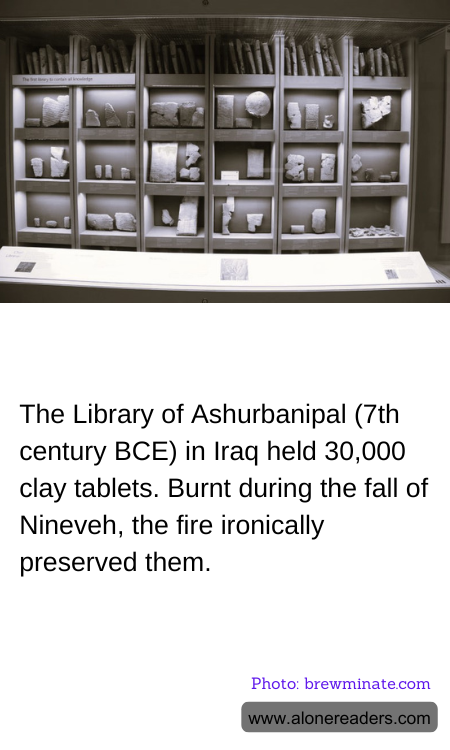
In the heart of ancient Mesopotamia, the Library of Ashurbanipal stands as a testament to the intellectual pursuits of one of history's most formidable empires. Located in Nineveh, the capital of the Assyrian Empire, this library was the brainchild of Ashurbanipal, the last great king of Assyria, who reigned from 668 to 627 BCE. Renowned for his scholarly interests, Ashurbanipal amassed a vast collection of texts, which included over 30,000 clay tablets inscribed with cuneiform script. These tablets covered a wide array of subjects, from literature and religion to science and law, offering a comprehensive glimpse into the knowledge and culture of the ancient Near East.
The library's collection was not merely a repository of Assyrian thought but also a melting pot of the region's intellectual heritage. Ashurbanipal's scribes diligently copied and preserved texts from Babylonia, Sumer, and Akkad, ensuring that the wisdom of these civilizations was not lost to time. Among the most famous works housed in the library was the Epic of Gilgamesh, one of the earliest known pieces of literature. This epic, along with many other texts, provided insights into the beliefs, myths, and daily life of the people who lived thousands of years ago.
Ironically, the library's preservation owes much to the very event that led to its destruction. In 612 BCE, Nineveh fell to a coalition of Babylonians, Medes, and Scythians, marking the end of the Assyrian Empire. During the sack of the city, the library was set ablaze. However, the intense heat from the fire baked the clay tablets, effectively preserving them for posterity. This inadvertent act of preservation has allowed modern archaeologists and historians to uncover and study these ancient texts, providing invaluable insights into a world long past.
The discovery of the Library of Ashurbanipal in the mid-19th century by British archaeologist Austen Henry Layard was a watershed moment in the field of Assyriology. The tablets unearthed from the ruins of Nineveh have since been painstakingly translated and analyzed, revealing a wealth of information about the ancient Near East. These texts have not only enriched our understanding of Assyrian culture but have also illuminated the interconnectedness of ancient civilizations, highlighting the exchange of ideas and knowledge across regions.
Today, the legacy of the Library of Ashurbanipal endures as a symbol of the enduring power of knowledge and the resilience of human culture. It serves as a reminder of the importance of preserving our intellectual heritage, even in the face of adversity. As scholars continue to study these ancient texts, the library's contribution to our understanding of history and the development of human thought remains immeasurable, bridging the gap between the ancient and modern worlds.