More About This Card
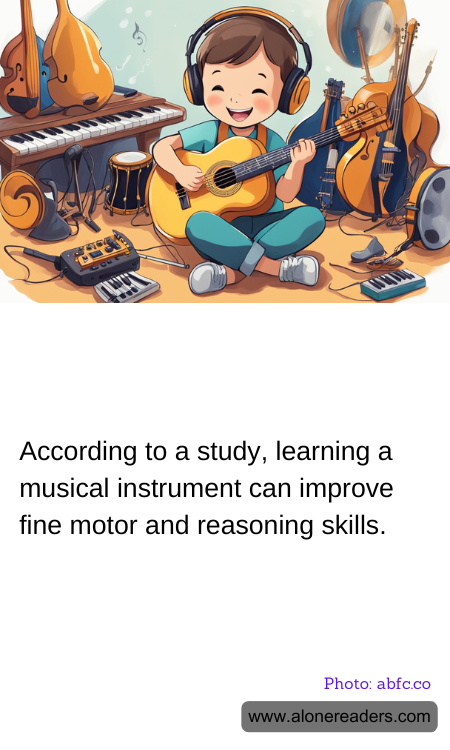
In recent years, the benefits of learning a musical instrument have been widely recognized, extending beyond the joy of creating music to enhancing cognitive abilities. A study has revealed that engaging in musical training can significantly improve fine motor skills and reasoning capabilities, offering a compelling reason for individuals of all ages to consider picking up an instrument.
Fine motor skills, which involve the coordination of small muscles in movements—usually involving the synchronization of hands and fingers—are crucial for everyday tasks. Playing a musical instrument requires precise finger movements and hand-eye coordination, which can lead to improved dexterity and control. For instance, pianists must navigate complex finger patterns, while violinists need to master bowing techniques and finger placements. This intricate coordination not only enhances the ability to perform musically but also translates into improved motor skills in other areas of life, such as writing, typing, and even sports.
Moreover, the study highlights that musical training can bolster reasoning skills, which are essential for problem-solving and critical thinking. Learning to read music and understand musical theory involves recognizing patterns, interpreting symbols, and making quick decisions, all of which engage the brain's reasoning faculties. This cognitive engagement can lead to better academic performance, as students who play instruments often exhibit improved abilities in subjects like mathematics and science, where logical reasoning is paramount.
The benefits of musical training are not limited to children; adults can also experience cognitive enhancements. For older adults, learning an instrument can serve as a form of mental exercise, potentially delaying cognitive decline and keeping the mind sharp. The process of learning new skills and memorizing music can stimulate the brain, promoting neuroplasticity—the brain's ability to reorganize itself by forming new neural connections.
In addition to cognitive and motor benefits, playing an instrument can also provide emotional and social advantages. It can be a source of relaxation and stress relief, offering an emotional outlet and a sense of accomplishment. Furthermore, participating in musical groups or ensembles can foster social connections and teamwork skills, enriching one's social life and community involvement.
In conclusion, the study underscores the multifaceted benefits of learning a musical instrument, making it a worthwhile pursuit for individuals of all ages. Whether one is seeking to enhance fine motor skills, improve reasoning abilities, or simply find a fulfilling hobby, musical training offers a unique blend of cognitive, emotional, and social rewards. As more people discover these advantages, the timeless appeal of music continues to resonate, encouraging a harmonious blend of skill development and personal growth.