More About This Card
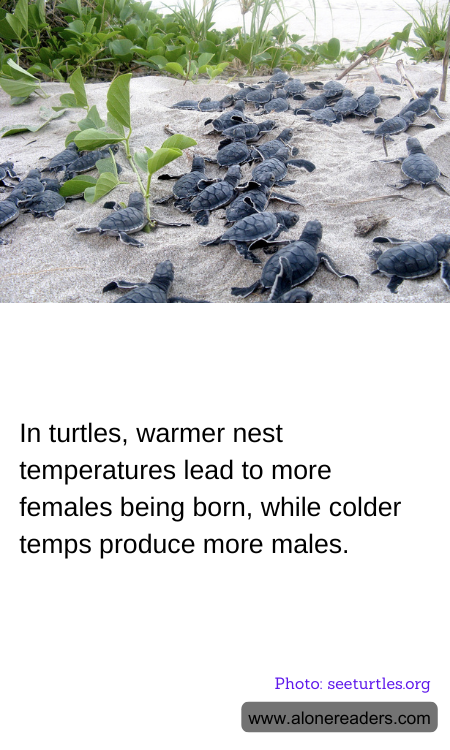
In the fascinating world of turtles, the temperature of their nests plays a crucial role in determining the sex of the hatchlings. This phenomenon, known as temperature-dependent sex determination (TSD), is a natural process that has intrigued scientists and nature enthusiasts alike. Unlike humans and many other animals, where sex is determined genetically, in turtles, it is the warmth of the nest that dictates whether more females or males will emerge.
When turtle eggs are incubated in warmer temperatures, typically above 29 degrees Celsius (about 84 degrees Fahrenheit), the likelihood of female hatchlings increases. Conversely, cooler nest temperatures, generally below 27 degrees Celsius (approximately 81 degrees Fahrenheit), tend to produce more male turtles. This delicate balance is a remarkable adaptation that has evolved over millions of years, allowing turtle populations to maintain a natural equilibrium between the sexes.
The implications of this temperature-dependent mechanism are profound, especially in the context of global climate change. As global temperatures rise, there is a growing concern that turtle populations could become skewed towards females, potentially leading to a shortage of males and impacting the species' ability to reproduce effectively. This shift could have long-term consequences for the survival of various turtle species, many of which are already threatened or endangered due to habitat loss, pollution, and poaching.
Conservationists are actively studying and monitoring turtle nesting sites to better understand the impact of changing temperatures. Some initiatives involve shading nests or relocating them to cooler areas to ensure a more balanced sex ratio. These efforts are crucial in helping to mitigate the effects of climate change on turtle populations and ensuring their continued survival.
The story of turtles and their temperature-dependent sex determination is a powerful reminder of the intricate connections between organisms and their environments. It highlights the importance of preserving natural habitats and addressing the broader challenges posed by climate change. By understanding and protecting these ancient creatures, we not only safeguard their future but also contribute to the health and diversity of our planet's ecosystems.
In conclusion, the temperature of turtle nests is a key factor in determining the sex of hatchlings, with warmer temperatures favoring females and cooler ones favoring males. As climate change continues to alter global temperatures, it is vital to monitor and manage turtle populations to ensure their survival. Through conservation efforts and increased awareness, we can help protect these remarkable animals and maintain the delicate balance of nature.