More About This Card
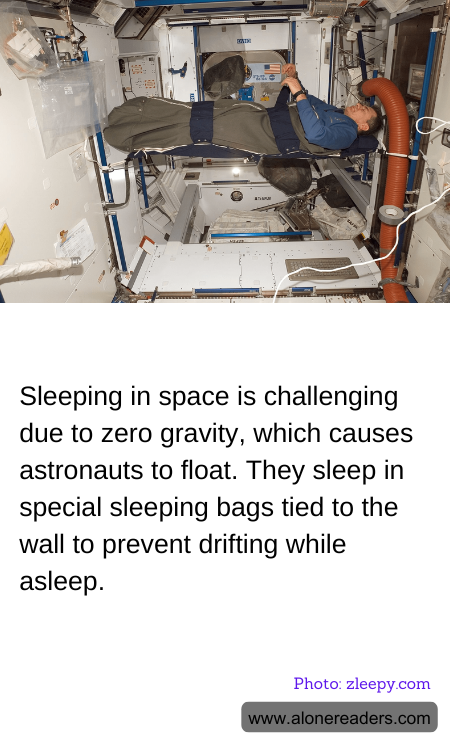
Sleeping in space presents a unique set of challenges that are vastly different from those on Earth. The absence of gravity, which causes astronauts to float, transforms the simple act of sleeping into a complex task that requires careful planning and adaptation. In the microgravity environment of space, the human body experiences a sensation of weightlessness, which can be both fascinating and disorienting. This lack of gravity means that astronauts do not have the natural cues that help them settle into a comfortable sleeping position, as they would in a bed on Earth.
To address these challenges, astronauts use specially designed sleeping bags that are secured to the walls of the spacecraft. These sleeping bags are equipped with straps and restraints to keep the astronauts from drifting around the cabin while they sleep. By anchoring themselves to the wall, astronauts can simulate the sensation of being in a bed, providing a sense of stability and security that is crucial for restful sleep. The sleeping bags are also designed to be breathable and comfortable, ensuring that astronauts can maintain a regular sleep cycle despite the unusual conditions.
The importance of sleep in space cannot be overstated. Just like on Earth, sleep is essential for maintaining physical health, cognitive function, and emotional well-being. However, the unique environment of space can disrupt an astronaut's circadian rhythm, the internal clock that regulates sleep-wake cycles. The absence of a natural day-night cycle, combined with the stress and excitement of space missions, can lead to sleep disturbances. To combat this, astronauts often follow a strict schedule and use tools like eye masks and earplugs to create a conducive sleeping environment.
Despite these measures, sleeping in space remains a challenge. The sensation of floating can be difficult to get used to, and some astronauts report feeling as though they are sleeping on a cloud. This can be both a novel and unsettling experience, as the body is not accustomed to such conditions. Additionally, the confined quarters of a spacecraft mean that astronauts must adapt to sleeping in close proximity to their crewmates, which can further complicate the quest for a good night's sleep.
In conclusion, sleeping in space requires innovative solutions and a willingness to adapt to an environment that is unlike anything on Earth. By using specially designed sleeping bags and adhering to a structured routine, astronauts can overcome the challenges posed by zero gravity and ensure they get the rest they need to perform their duties effectively. As space exploration continues to advance, understanding and improving sleep in space will remain a critical component of ensuring the health and success of astronauts on their missions.