More About This Card
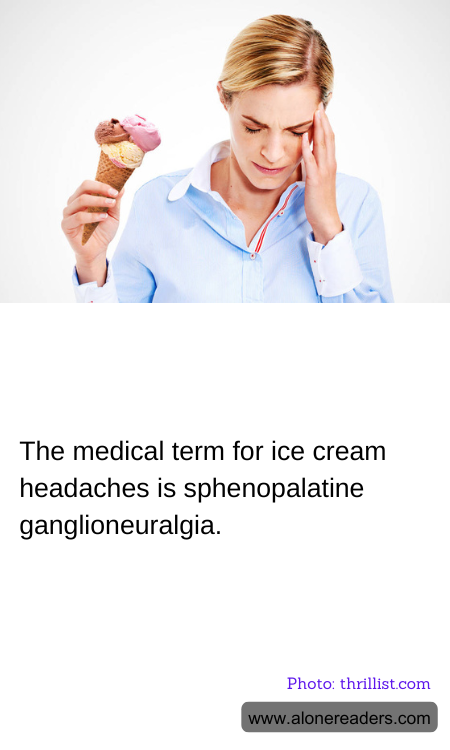
Many of us have experienced that sudden, sharp pain in the forehead when we indulge in a cold treat too quickly. Commonly known as an "ice cream headache," this phenomenon has a more scientific name: sphenopalatine ganglioneuralgia. Despite its intimidating name, this condition is harmless and temporary, but understanding it can help us appreciate the intricacies of our body's response to cold stimuli.
Sphenopalatine ganglioneuralgia occurs when something cold, like ice cream, comes into contact with the roof of the mouth or the back of the throat. This sudden temperature change causes blood vessels in the area to constrict and then rapidly dilate. The trigeminal nerve, which is responsible for sensation in the face, interprets this as pain and sends a signal to the brain. The result is a brief but intense headache that typically lasts less than a minute.
This type of headache is a fascinating example of how our body's nervous system works. The trigeminal nerve is one of the largest nerves in the head, and it plays a crucial role in facial sensation. When it detects the cold stimulus, it mistakenly interprets it as a threat, triggering a pain response. This is why the pain is felt in the forehead, even though the cold is in the mouth. It's a classic case of referred pain, where the brain misinterprets the source of the discomfort.
While sphenopalatine ganglioneuralgia is not dangerous, it can be quite uncomfortable. Fortunately, there are simple ways to prevent or alleviate the pain. Eating cold foods slowly and allowing them to warm slightly in the mouth before swallowing can help. If a headache does occur, pressing the tongue against the roof of the mouth or drinking warm water can help warm the area and relieve the pain more quickly.
Understanding the science behind ice cream headaches can make them less mysterious and more manageable. It also highlights the incredible complexity of the human body and how it responds to various stimuli. The next time you experience a sphenopalatine ganglioneuralgia, you can take comfort in knowing that it's a normal, albeit uncomfortable, reaction and that it will pass quickly.
In essence, sphenopalatine ganglioneuralgia is a reminder of the delicate balance our bodies maintain in response to environmental changes. It underscores the importance of moderation, even in the simple pleasure of enjoying a cold treat. So, the next time you reach for that scoop of ice cream, remember to savor it slowly, not just for the taste, but to avoid that fleeting yet memorable headache.