More About This Card
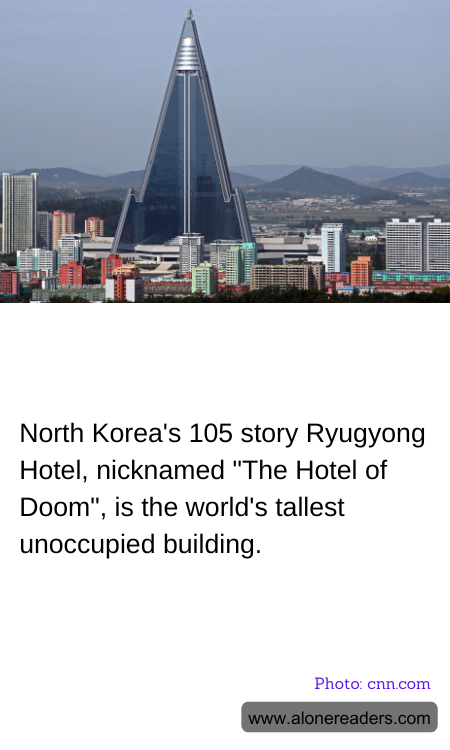
In the heart of Pyongyang, North Korea, stands a colossal structure that has intrigued and mystified the world for decades: the Ryugyong Hotel. This 105-story pyramid-shaped skyscraper, often referred to as "The Hotel of Doom," holds the title of the world's tallest unoccupied building. Its towering presence is a testament to North Korea's ambitions and the complexities of its economic and political landscape.
Construction of the Ryugyong Hotel began in 1987, with the North Korean government envisioning it as a symbol of prosperity and modernity. The original plan was to open the hotel in time for the 13th World Festival of Youth and Students in 1989. However, due to a combination of financial difficulties and technical challenges, the project was halted in 1992, leaving the building incomplete and shrouded in mystery. For years, the skeletal structure loomed over Pyongyang, a stark reminder of the country's economic struggles during the post-Cold War era.
In 2008, construction resumed with the help of an Egyptian telecommunications company, Orascom Group, which aimed to complete the exterior of the building. By 2011, the glass facade was finished, giving the Ryugyong Hotel a sleek and modern appearance. Despite these efforts, the interior remains largely unfinished, and the building has yet to open its doors to guests. The reasons for this continued delay are multifaceted, involving both financial constraints and the logistical challenges of outfitting such a massive structure.
The Ryugyong Hotel's nickname, "The Hotel of Doom," stems from its long-standing vacancy and the aura of mystery surrounding its purpose and future. While it was initially intended to house luxury accommodations, restaurants, and entertainment facilities, the building's fate remains uncertain. Some speculate that it could eventually serve as office space or a mixed-use development, but official plans have not been publicly disclosed.
Despite its unoccupied status, the Ryugyong Hotel has become an iconic part of Pyongyang's skyline and a symbol of North Korea's complex relationship with modernization and international perception. It stands as a monument to ambition, resilience, and the challenges of navigating global economic realities. For visitors and observers, the hotel is a reminder of the enigmatic nature of North Korea itself—a country full of contradictions and surprises.
As the world watches, the future of the Ryugyong Hotel remains an open question. Whether it will eventually fulfill its original purpose or find a new role in Pyongyang's urban landscape, the building continues to capture the imagination of those who ponder its past and speculate on its potential.