More About This Card
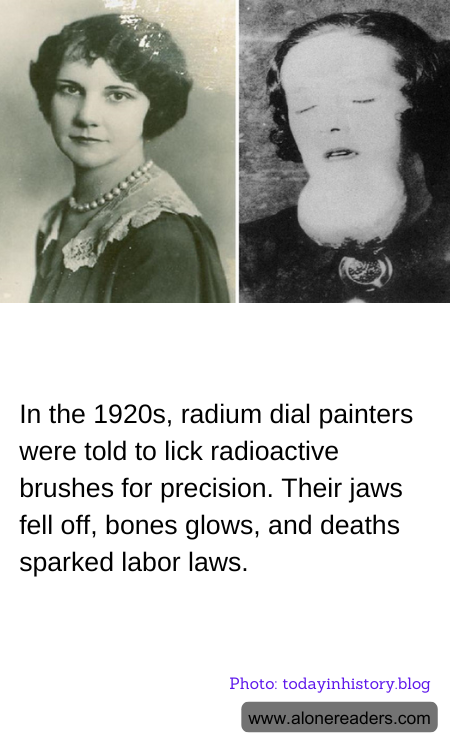
In the early 1920s, a group of young women found themselves at the forefront of a burgeoning industry that promised both innovation and opportunity. These women, known as the "Radium Girls," were employed to paint watch dials with a luminous paint made from radium, a newly discovered element that glowed in the dark. The allure of radium was not just in its glow; it was hailed as a miracle substance, believed to have health benefits and used in a variety of consumer products. However, the reality of working with radium was far more sinister than anyone could have imagined.
The dial painters were instructed to use a technique called "lip-pointing" to ensure precision in their work. This involved shaping the bristles of their paintbrushes with their lips, a practice that led them to ingest small amounts of radium with each stroke. Unbeknownst to them, radium is a highly radioactive substance, and its ingestion had devastating effects on their health. Over time, the women began to suffer from mysterious and severe ailments. Their teeth fell out, their jaws deteriorated, and their bones became so fragile that they glowed in the dark. Tragically, many of these women succumbed to their illnesses, their deaths slow and agonizing.
The plight of the Radium Girls eventually caught the attention of the public and the legal system. As more women fell ill and died, it became clear that their suffering was directly linked to their exposure to radium. The ensuing legal battles were arduous, but they ultimately led to significant changes in labor laws and workplace safety standards. The Radium Girls' fight for justice highlighted the need for regulations to protect workers from hazardous materials and set a precedent for future occupational safety legislation.
The legacy of the Radium Girls is a poignant reminder of the importance of worker safety and the need for vigilance in the face of industrial innovation. Their story is a testament to the courage and resilience of those who stood up against powerful corporations to demand accountability and change. Today, their sacrifices are remembered as a pivotal moment in the history of labor rights, serving as a cautionary tale about the dangers of unchecked industrial practices and the critical need for ethical standards in the workplace.
As we reflect on the tragic experiences of the Radium Girls, we are reminded of the progress that has been made in ensuring safer working conditions for all. Their story continues to inspire efforts to protect workers' rights and to advocate for the health and safety of employees across industries. The lessons learned from their ordeal underscore the ongoing responsibility to prioritize human well-being over profit and to ensure that history does not repeat itself.