More About This Card
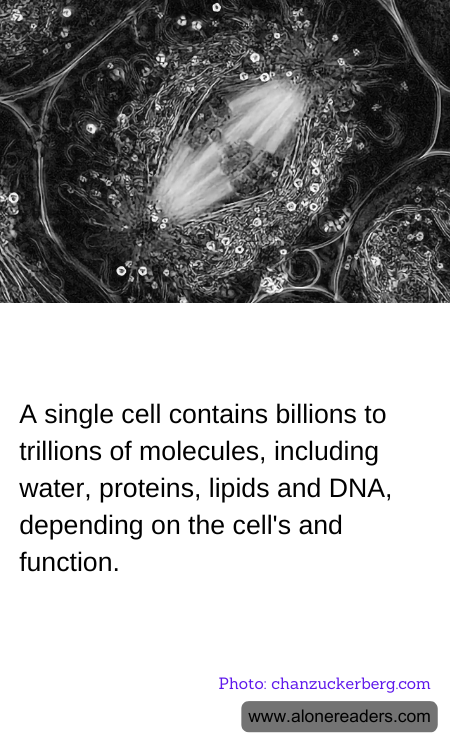
In the intricate world of biology, the cell stands as a fundamental unit of life, a microscopic marvel that houses an astonishing array of molecules. Each cell, depending on its type and function, contains billions to trillions of molecules, working in harmony to sustain life. This molecular symphony includes water, proteins, lipids, and DNA, each playing a crucial role in the cell's structure and function.
Water is the most abundant molecule in cells, making up about 70% of their composition. It acts as a solvent, facilitating biochemical reactions and transporting nutrients and waste products. Water's unique properties, such as its ability to dissolve a wide range of substances, make it indispensable for cellular processes. It also helps maintain the cell's shape and provides a medium for the movement of molecules within the cell.
Proteins are the workhorses of the cell, performing a vast array of functions. They act as enzymes, speeding up chemical reactions necessary for life. Proteins also play structural roles, forming the cytoskeleton that gives cells their shape and stability. Additionally, they are involved in cell signaling, immune responses, and the transport of molecules across cell membranes. The diversity of proteins in a single cell is immense, with each type tailored to perform specific tasks essential for the cell's survival and function.
Lipids, another vital component, are primarily responsible for forming the cell membrane. This lipid bilayer acts as a barrier, protecting the cell's internal environment while allowing selective interaction with the external world. Lipids also serve as energy storage molecules and play roles in signaling pathways that regulate cellular activities. The fluid nature of the lipid bilayer is crucial for the dynamic processes of endocytosis and exocytosis, which involve the transport of materials into and out of the cell.
DNA, the genetic blueprint of life, is housed within the cell's nucleus in eukaryotic cells. It contains the instructions for building and maintaining the organism, encoding the information needed to produce proteins. DNA's structure as a double helix allows it to be compactly stored and accurately replicated during cell division. The integrity of DNA is vital for the proper functioning of the cell and the organism as a whole, as it ensures that genetic information is passed on correctly to the next generation.
The complexity and efficiency of a single cell are truly remarkable. Despite its microscopic size, a cell is a bustling hub of activity, with each molecule playing a specific role in maintaining life. Understanding the molecular composition of cells not only highlights the intricacies of life at the smallest scale but also underscores the interconnectedness of all living organisms. As science continues to unravel the mysteries of cellular processes, the appreciation for the elegance and sophistication of cells only deepens, inspiring awe and curiosity across generations.