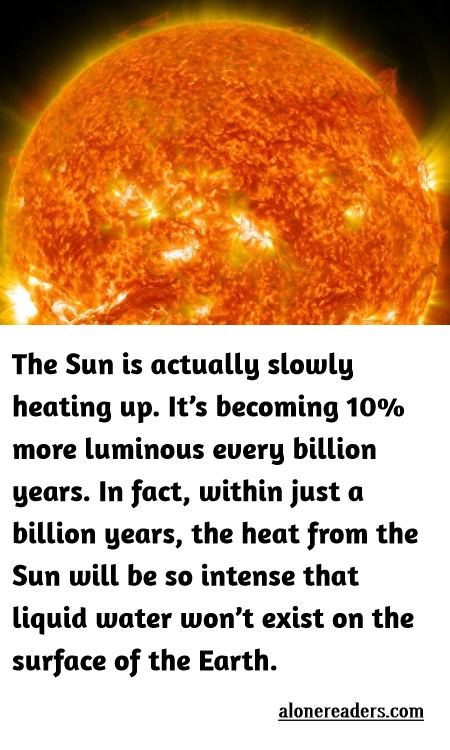
As a star, the Sun is constantly evolving and changing through the nuclear fusion processes that occur in its core. This gradual change in the Sun's core affects its output and overall behavior, influencing the entire solar system, particularly Earth. Currently, the Sun is approximately halfway through its life cycle as a stable star. As it ages, the Sun is gradually getting hotter, increasing its luminosity by about 10% every billion years.
This incremental increase might seem minor, but its implications for Earth are profound. With a 10% increase in luminosity, the Earth’s surface temperatures will rise, leading to drastic changes in climate and weather patterns. One of the most significant impacts will be on Earth’s water systems. As the Sun becomes more luminous, the increased heat will cause more water to evaporate, disrupting the delicate balance of Earth's hydrological cycle.
In about a billion years, scientists predict that the increasing heat output from the Sun will eventually make it impossible for liquid water to exist on the surface of Earth. This phenomenon, primarily due to a runaway greenhouse effect, will likely render the planet inhospitable to life as we know it. Oceans could evaporate completely, and the atmosphere would become laden with water vapor, which acts as a greenhouse gas, trapping even more heat.
The disappearance of liquid water would have catastrophic effects on all forms of life, considering that water is an essential ingredient for life on Earth. Ecosystems would collapse, and the planet might resemble Venus, with extremely high temperatures and a thick, oppressive atmosphere dominated by carbon dioxide and water vapor.
Understanding these long-term changes is crucial for understanding not just the future of our planet, but also the lifecycle of stars similar to our own Sun and their potential habitability zones. This knowledge pushes scientists and researchers to look for solutions and alternatives to safeguard future generations and potentially look for habitable options beyond Earth. Meanwhile, it also provides a stark reminder of the transient nature of planetary habitability and the intricate balance of factors that allow a planet to support life.
