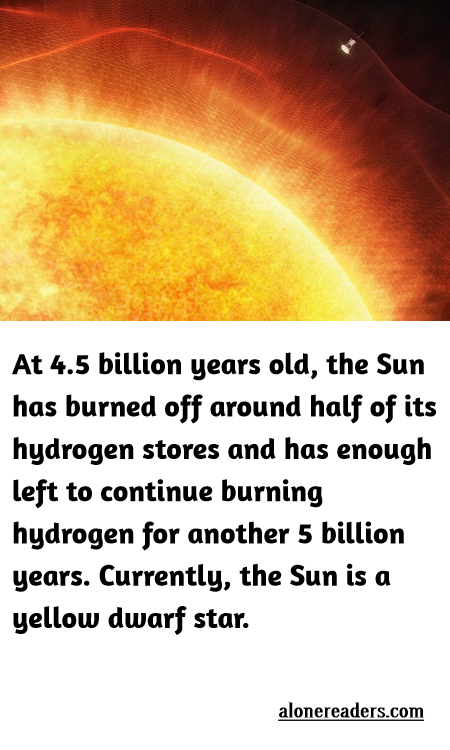
The Sun, at 4.5 billion years old, represents not only the center of our solar system but also a consistent provider of the energy crucial for life on Earth. It has used about half of its hydrogen fuel over these billions of years, efficiently powering the solar fusion that lights up our days. This staggering duration is hard to grasp, yet even more impressive is the Sun's capacity to continue this process for about another 5 billion years, according to current scientific understanding.
As a yellow dwarf star, the Sun is in a stable phase of its life cycle, during which nuclear fusion reactions in its core fuse hydrogen atoms into helium. This process releases a tremendous amount of energy, manifesting as heat and light. Despite its seemingly unchanging appearance from Earth, the Sun is dynamic, with its surface roiling with solar flares and sunspots driven by magnetic activity.
Looking towards the future, the Sun’s fuel reserves will eventually dwindle, marking a shift to the next stages of its stellar evolution. It will expand into a red giant, engulfing the inner planets, including potentially Earth, before shedding its outer layers and retreating into a white dwarf. This gradual transition underscores not only the life cycles of stars but also the immense time scales over which astronomical events unfold.
Understanding the timeline and mechanisms of the Sun's life not only satisfies cosmic curiosity but also anchors our understanding of how stellar processes affect planetary systems. This knowledge is crucial for everything from understanding the past climates of Earth to predicting future scenarios and planning missions into outer space. Thus, the Sun serves as a fundamental and ongoing case study in the broader cosmos.
