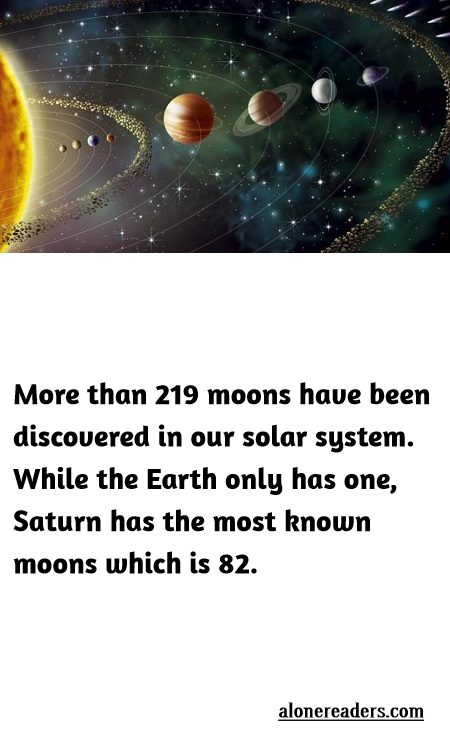
Exploring the 219 moons of our solar system opens a thrilling chapter in understanding the broader cosmic neighborhood. Each of these natural satellites presents unique characteristics and scientific significance, making them subjects of intense study. Earth, familiar and singular, has only one moon which significantly impacts its climate and tides. Often considered as a benchmark for comparing other moons, Earth's moon is vital for studies in geology and astronomy.
On the far end of the spectrum lies Saturn, the planet with the most moons in our solar system, currently known to have 82 moons. This information significantly enhances our understanding of the Saturnian system and the dynamic processes that occur within it. Saturn's moons vary drastically in size, composition, and orbit dynamics, creating a complex gravitational ballet that influences Saturn's rings and magnetosphere. Titan, Saturn's largest moon, and the second-largest in the solar system, has a thick atmosphere, rich in nitrogen and organic, carbon-rich compounds, making it a prime target for research into prebiotic chemistry.
The study of these moons is not just academic. It provides crucial insights into the processes of planetary formation and evolution across the solar system. Moons can reveal details about their host planets, including atmospheric compositions, internal structures, and magnetic fields. Moreover, some moons have subsurface oceans, hidden under icy crusts, which might harbor simple life forms. For instance, Jupiter's moon Europa and Saturn's moon Enceladus are both thought to possess vast subterranean oceans, positioning them as key interests in the search for extraterrestrial life within our solar system.
In summary, the 219 moons orbiting the planets in our solar system are more than just satellites; each is a world unto itself, offering unique opportunities for scientific discovery and advancing our knowledge of the universe. As technology and research methods continue to improve, the potential to learn more from these moons increases, possibly providing answers to some of the most profound questions about life beyond Earth.
