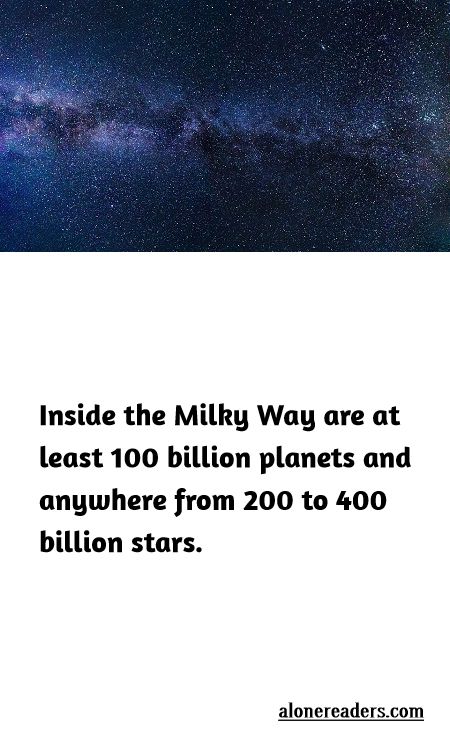
In the vast expanse of the Milky Way galaxy, a breathtaking array of celestial bodies spins through the dark. Among this cosmic dance, it's estimated that there are at least 100 billion planets and somewhere between 200 to 400 billion stars, though these numbers could still be conservative. The diversity and scale of the objects contained within our galaxy alone evoke a sense of wonder and curiosity.
Stars, the most visible and luminous of these celestial bodies, come in an array of types and sizes, from red dwarfs to massive blue supergiants. The vast majority are likely to be red dwarfs, smaller and cooler than the Sun, and much more common. These numbers suggest not just a rich variety of solar systems but hint at the potential diversity of planetary environments, each possibly hosting unique geological and atmospheric conditions.
The planets themselves offer an even broader canvas for diversity. Ranging from gas giants many times larger than Jupiter to rocky worlds that may resemble Earth, each planet tells a part of the story of the Milky Way. Some of these worlds could be enveloped in thick atmospheres, harboring storms and weather patterns unlike anything seen on Earth, while others may be barren but with potential underground oceans.
The implications of these numbers are significant not only for astronomers and scientists but for humanity as a whole. Knowing that there are possibly hundreds of billions of stars with an even greater number of planets revolving around them expands the potential for life elsewhere in the universe and raises questions about our place and role in this vast cosmic arena.
The sheer scale of the Milky Way also pushes the boundaries of technology and exploration. Each new invention brings us closer to understanding not just the nature of our galaxy but also the laws of physics that govern the entire universe. As we peer deeper into the cosmos, the knowledge gained not only enriches our understanding but also unites us through a shared quest for discovery in the boundless depths of space.
