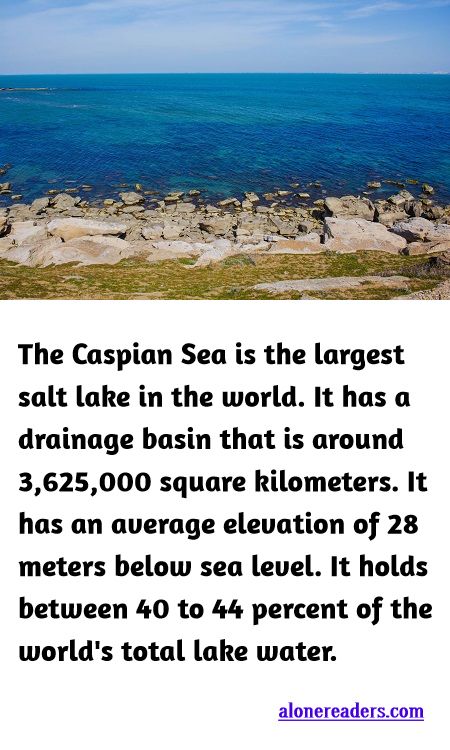
The Caspian Sea, recognized as the largest salt lake on Earth, is a unique body of water in more ways than one. It spans a massive area of around 371,000 square kilometers and is notably the largest enclosed inland water body on the planet. This sea-lake features an impressively large drainage basin that encompasses about 3,625,000 square kilometers, extending across multiple countries including Russia, Kazakhstan, Turkmenistan, Iran, and Azerbaijan.
Interestingly, the Caspian Sea has an average elevation of about 28 meters below sea level, marking it as one of the world’s largest depressions. Its unique geographical placement and vast size influence regional climates and ecosystems. The water volume of the Caspian is also quite remarkable, retaining between 40 to 44 percent of the world’s total lake water. This sheer volume not only makes it a pivotal physical landmark but also a critical water source in the arid regions surrounding it.
Environmental factors play a significant role in the life of the Caspian. It hosts a diverse range of flora and fauna, including unique species like the Caspian seal, and serves as a crucial habitat for various bird species during migratory periods. The Caspian Sea is also rich in natural resources like oil and natural gas, making it a central economic asset for the bordering nations. However, this economic boon is not without its challenges. Issues such as pollution, shrinking shorelines, and ecological disruption are ongoing concerns, driven largely by industrial activities and climate change.
The intricate balance between economic value and environmental sustainability is an ongoing conversation among the nations bordering the Caspian Sea. It is imperative to implement collaborative international efforts to ensure the preservation of this unique aquatic treasure. As a vital water body with significant ecological, economic, and geographic import, the Caspian Sea's health and stability are essential not only for its bordering countries but for the global community as well.
