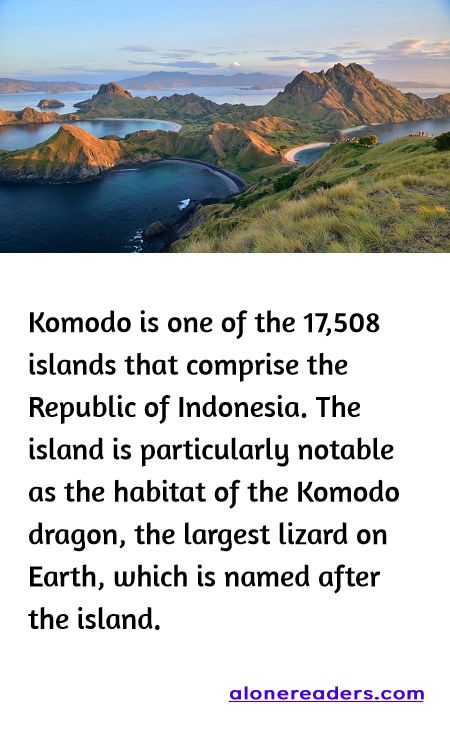
Komodo Island, a gem within Indonesia's vast archipelago of over 17,000 islands, stands out not only for its raw, rugged beauty but also for being the exclusive habitat of the world's largest living lizard, the Komodo dragon. This island offers a peek into a primordial landscape, somewhat unchanged over millions of years, providing a unique window into evolutionary biology and the natural history of these giants.
The Komodo dragon, scientifically known as Varanus komodoensis, can grow up to an impressive length of 10 feet and weigh over 150 pounds. These reptiles are apex predators in their ecosystem, dominating the food chain and serving as a vital component of the island's biological equilibrium. Their physical prowess, keen senses, and hunting strategy involving venom, have placed them at the top of their ecological niche. The dragons are not just significant biologically, but also culturally, as they are deeply woven into local folklore and the mystical beliefs of the Komodo islanders.
Komodo Island itself is a part of the Komodo National Park, a protected area which also includes several other nearby islands and the surrounding marine areas. Established in 1980 to protect the Komodo dragon, the park later expanded to include biodiversity conservation both on land and in water, highlighting the extensive coral reefs, marine biodiversity, and mangroves. In 1991, the park was declared a UNESCO World Heritage Site, affirming its global ecological and cultural value.
Visitors to Komodo Island are struck by its stark, raw landscapes. Semi-arid vegetation and the rugged terrains provide a breathtaking backdrop to the dry forests and savannahs that pepper the island. This harsh environment challenges the survival skills of many species, yet it supports a diverse range of flora and fauna, adapted to thrive in these conditions.
Tourism, while a significant revenue source for the region, is carefully managed to ensure minimal environmental impact. Efforts are continually being made to strike a balance between opening up this rare landscape to the world and preserving the delicate ties that bind it. In recent years, policies have been adjusted to promote sustainable tourism, which aims to educate global visitors about conservation while supporting local livelihoods.
In conclusion, Komodo Island isn't just a place to witness the grandeur of the Komodo dragons but also a sanctuary where one can observe the intricate interactions of an ecosystem barely touched by time. Its international status as a site of natural heritage safeguards its existence for future generations, emphasizing the need and the challenge of conserving one of the earth’s truly unique treasures.
