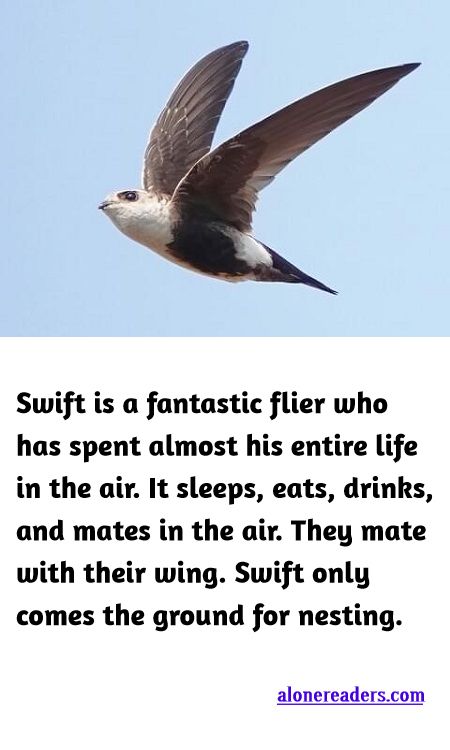
Swifts are remarkable birds, known for their exceptional flying capabilities, spending the majority of their lives airborne. These birds are so adept at flying that they perform nearly all of their essential living functions—sleeping, eating, drinking, and even mating—without ever needing to land. Swifts can glide seamlessly through the air, maneuvering with precision and grace.
One of the most fascinating aspects of swifts is their ability to sleep while flying. Studies suggest that they are capable of shutting down parts of their brain in a semi-sleep state, allowing them to rest mid-flight without losing altitude or control. This ability is crucial for their survival during long migratory journeys.
Feeding for swifts occurs on the wing as well. They consume airborne insects and spiders, catching them during flight. Their sharp, streamlined wings and fast, agile flying skills make them adept hunters of flying insects. Similarly, swifts sip water from lakes, rivers, or wet surfaces while swooping down during flight, hardly touching the surface.
Mating too occurs in the sky; swifts pair up and mate with a unique aerial acrobat display, utilizing their wings for balance and control in what can only be described as a true spectacle of nature. It is only when it comes to breeding that swifts make their way to the ground—or more accurately, to crevices and cavities high up in cliffs, old buildings, or trees where they build their nests. The nest serves as the sole terrestrial anchor in their otherwise airborne lives.
Despite their almost mythical existence in the air, swifts are tied to their terrestrial roots for reproduction, highlighting a fascinating dichotomy in their life cycle. This need to nest grounds them, quite literally, providing a rare glimpse of these incredible fliers at rest. Their unique way of life, adaptation, and the sheer amount of time spent in the air make swifts a symbol of freedom and capability in the avian world. Their existence not only marvels those who study avian species but also serves as a reminder of the extraordinary adaptations and behaviors that wildlife develops to thrive in our natural world.
