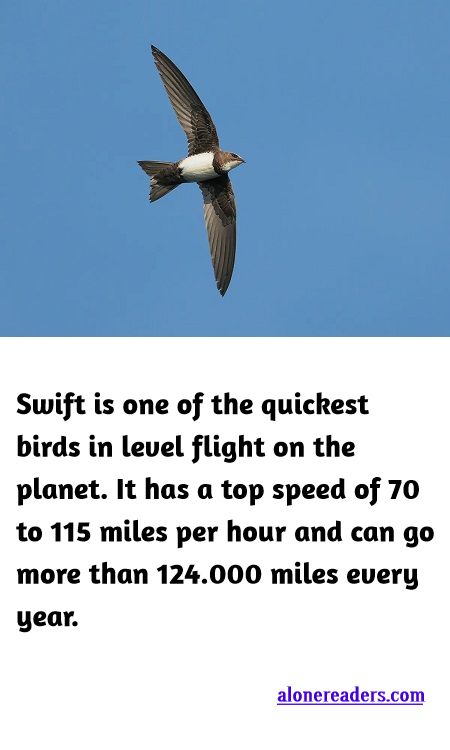
Swifts are remarkable birds, known for their extraordinary aerial abilities and impressive migratory patterns. These birds spend most of their lives airborne, flying at speeds ranging from 70 to 115 miles per hour, making them among the fastest birds in level flight in the world. Swifts are also long-distance travelers. Over the course of a year, they can cover more than 124,000 miles, a testament to their incredible stamina and efficiency in flight.
One of the most fascinating aspects of swifts is their ability to eat, sleep, mate, and even gather nesting materials while aloft. These birds only land to nest. Their physical structure supports their aerial lifestyle, with long, scythe-shaped wings and a small, streamlined body, which makes them highly adapted to life in the sky.
The common swift, in particular, spends almost its entire life in the air, landing only to breed and raise its young. During migration, swifts can cover thousands of miles, traveling between Europe and Africa with barely any rest. Their migratory routes and times are precisely tuned to take advantage of seasonal patterns of weather and food availability.
Swifts are not only champions of flight but also play a critical role in the ecosystems they inhabit. As aerial insectivores, they consume large quantities of airborne insects, acting as natural pest control. This diet also influences their migratory patterns, pushing them to make seasonal movements in sync with the peaks in insect populations, which are influenced by temperature and rainfall patterns.
The adaptability and resilience of swifts, however, face threats from urbanization and the loss of nesting sites. Historical buildings, where swifts often nest, are being renovated across the world, and suitable new alternatives are not always available. Conservation efforts are crucial to ensuring these remarkable birds continue to grace our skies. Strategies include designing buildings with swift-friendly nesting sites and educating the public and policymakers about the importance of preserving these avian athletes.
Indeed, the swift is a reminder of nature's ingenuity and the delicate balances within ecosystems that support life on Earth. Their incredible journeys and life spent almost entirely on the wing continue to captivate and inspire further research and conservation efforts, ensuring that these extraordinary creatures will continue to soar across our skies for generations to come.
