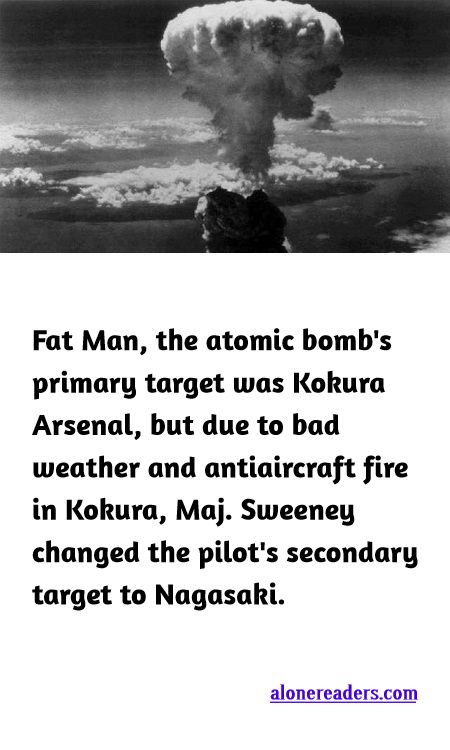
On August 9, 1945, during the final stages of World War II, the United States employed the atomic bomb known as "Fat Man" in a devastating attack on Nagasaki, Japan. Initially, the primary target for this attack was not Nagasaki but the Kokura Arsenal, a major military armament complex. The plan to deploy the atomic weapon on Kokura was obstructed primarily due to unfavorable weather conditions and significant antiaircraft fire, which made the bombing operation perilous and visibility poor.
Major Charles W. Sweeney, piloting the B-29 bomber named Bockscar, found it imperative to switch to a secondary target to ensure the mission's success. Nagasaki, an important shipbuilding city and a vital part of Japan's wartime industrial output, then became the alternative target. As fate would have it, although cloud cover initially obscured Nagasaki as well, a brief break in the clouds provided the necessary visibility for Bockscar's bombardier.
The bomb was dropped at approximately 11:02 AM, exploding in a massive blast over Nagasaki. The immediate effects were catastrophic, with a large portion of the city obliterated and thousands of its inhabitants killed instantly. The aftermath of the explosion saw a rise in radiation sickness, severe burns, and other related injuries, which contributed to a horrific increase in the death toll in the days and months that followed.
The decision to use atomic weaponry on Nagasaki, coming just three days after the similarly devastating attack on Hiroshima, hastened the end of World War II. Japan's Emperor Hirohito, shaken by the unimaginable destructiveness of the bombs, announced his country’s surrender on August 15, 1945, which was formally signed on September 2, thereby concluding the Pacific War and effectively ending World War II. However, the ethical implications and the immense loss of life resulting from the atomic bombs continue to stir debate and reflection on the use of such weapons and the dire consequences of nuclear warfare.
