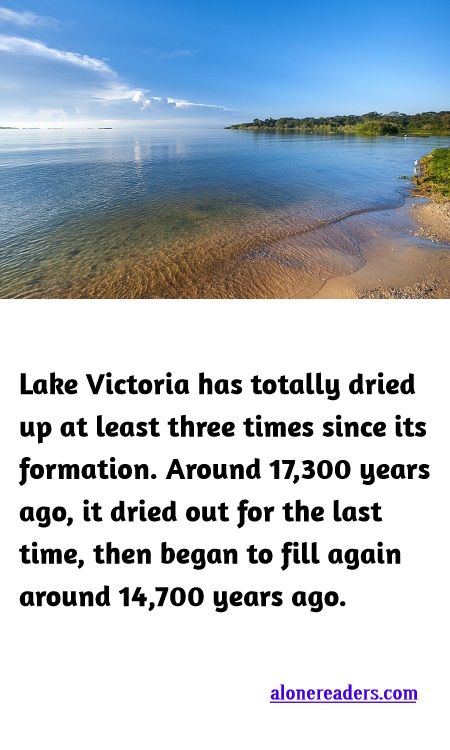
Lake Victoria, one of the African Great Lakes, holds a rich history that is both geological and ecological. Notably, it has experienced complete desiccation multiple times since its formation. Scientific evidence suggests that Lake Victoria last dried up approximately 17,300 years ago, marking a significant prehistoric event. The drying up of a lake as vast as Victoria, which is the world's second-largest freshwater lake by surface area, would have had profound impacts on the local climate, biodiversity, and early human societies inhabiting this region.
The process of Lake Victoria drying up and subsequently refilling has drawn significant interest from the scientific community. The refilling began around 14,700 years ago, in response to changing climatic conditions at the end of the last Ice Age. This change marked the commencement of the Holocene epoch, a period characterized by a warmer climate and retreating glaciers, which contributed to the rising water levels in many parts of the world.
The refilling of Lake Victoria would have transformed the region. It led to the development of rich ecosystems and the return of flora and fauna, which in turn supported the resurgence and evolution of human populations. The lake's waters formed a crucial resource for agriculture, drinking, fishing, and transportation pathways, playing a crucial role in the culture and economy of the surrounding communities.
Moreover, this transformation had significant ecological and evolutionary consequences, notably the rapid speciation of cichlid fish in the lake. This phenomenon is one of the most dramatic examples of adaptive radiation observed in modern science and has been a key focus of evolutionary biology studies. The diversity of life that sprung from Lake Victoria since it last refilled is a testament to the dynamic and resilient nature of ecological systems.
In summary, the historical drying and refilling of Lake Victoria not only highlight significant geological and climatic shifts in Earth's history but also underscore the adaptability of life and the interconnectedness of ecosystems and human development. These events continue to be of great interest not only for their geological significance but also for understanding broader ecological and evolutionary principles.
