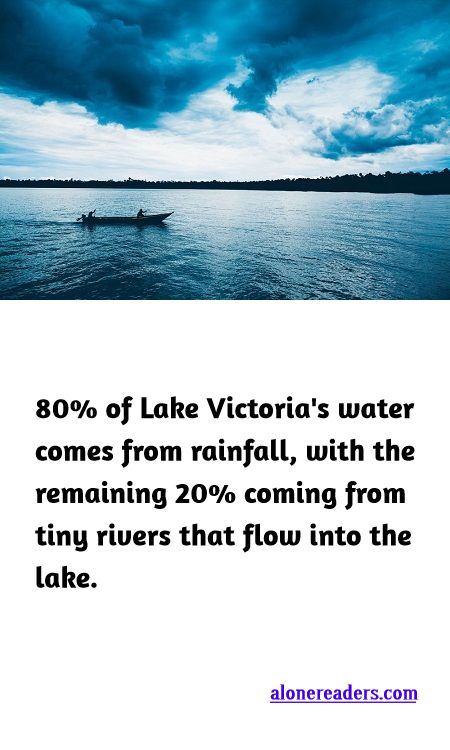
Lake Victoria, one of the African Great Lakes, holds the title as the largest lake by area on the African continent and the world's second-largest freshwater lake by surface area. This vast body of water plays a critical role in supporting the economies and ecosystems of the region. An interesting aspect of Lake Victoria is the origin of its water supply. Surprisingly, 80% of the water in Lake Victoria is derived from rainfall. This highlights the lake's heavy dependence on direct precipitation and the climate patterns of the surrounding regions.
The remaining 20% of the water input comes from numerous small rivers that meander their way into the lake. Unlike many other large lakes around the world, where significant rivers provide the majority of water flow, Lake Victoria's riverine supply is relatively minor in comparison to the direct precipitation it receives. This unique hydrological pattern shapes the ecological dynamics and water quality of the lake.
One of the crucial concerns related to this dependence on rainfall is the vulnerability of the lake to climatic variances, such as droughts or changes in rainfall patterns due to climate change. Such changes can significantly affect water levels, which in turn impact local fisheries, agriculture, and potable water supplies for millions of inhabitants around the basin.
Furthermore, the lake's ecosystem is threatened by a variety of human activities such as deforestation, agriculture, and urban runoff, which affect the inflow from these small rivers. The pollutants and sediments carried by river inflows can exacerbate ecological problems like eutrophication, which leads to the growth of harmful algal blooms. This not only affects the aquatic life but also the health and livelihoods of populations that rely on Lake Victoria for food, employment, and recreation.
Efforts to safeguard Lake Victoria and its watershed are essential to ensure the sustainability of this critical resource. This includes implementing comprehensive water management strategies that address both the effects of climate variability and human impacts. It's equally important for the surrounding communities, governments, and international partners to collaborate in preserving the health of the lake for future generations. As Lake Victoria continues to face various challenges, understanding and managing its primary water sources, particularly the significant role of rainfall, becomes ever more crucial.
