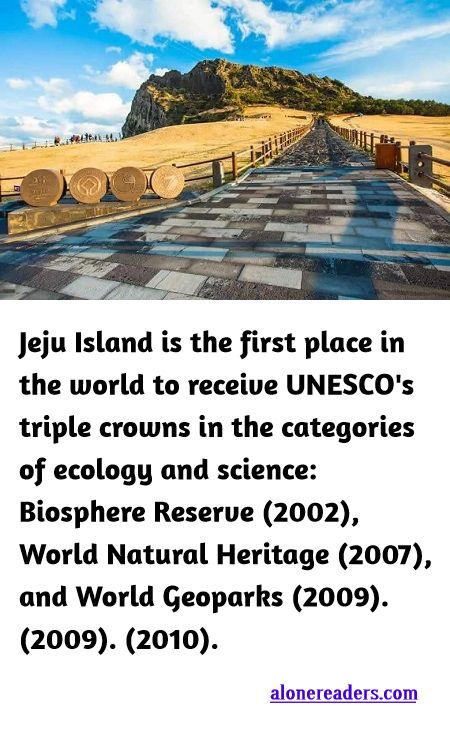
Nestled off the southern coast of South Korea, Jeju Island is a unique testament to the beauty and scientific importance of natural landscapes. It is the only location on the planet to be recognized with UNESCO’s three prestigious accolades in ecology and science. This speaks volumes about the island's diverse ecosystems and geological value. In 2002, it was designated a Biosphere Reserve, highlighting its efforts in maintaining a balanced relationship between human activities and conservation. Five years later, in 2007, Jeju earned the title of a World Natural Heritage site, which recognized its exceptional natural phenomena and the beauty of its volcanic landscapes, including the Hallasan Mountain, lava tubes, and tuff cones. Completing the triple crown, in 2010, Jeju was acknowledged as a World Geopark, a title that underscores its geological significance and encourages geotourism and local economic development through its geological features.
The island’s triple crown of awards has not only placed it on the map as a haven for ecologists, geologists, and nature lovers but also as a compelling destination for international tourists seeking a connection with pristine nature and sustainable practices. Jeju's integrated approach to conservation and development serves as a model for other destinations worldwide, promoting education and local engagement in ecological preservation. The blend of stunning scenery, inviting trails, preserved fauna, and flora along with informative visitor centers allows an immersive experience that melds learning with leisure.
Jeju’s status is thus more than just titles; it is a continuing story of harmony between mankind and nature, an example of how sensitive areas can be managed responsibly while providing opportunities for education, research, and tourism. Every corner of Jeju Island offers a reminder of the reasons behind its triple UNESCO recognition, ensuring each visitor leaves with a deeper appreciation of its natural wonders. As the island continues to attract global attention, it reinforces the importance of sustainability in preserving such unique landscapes for future generations.
