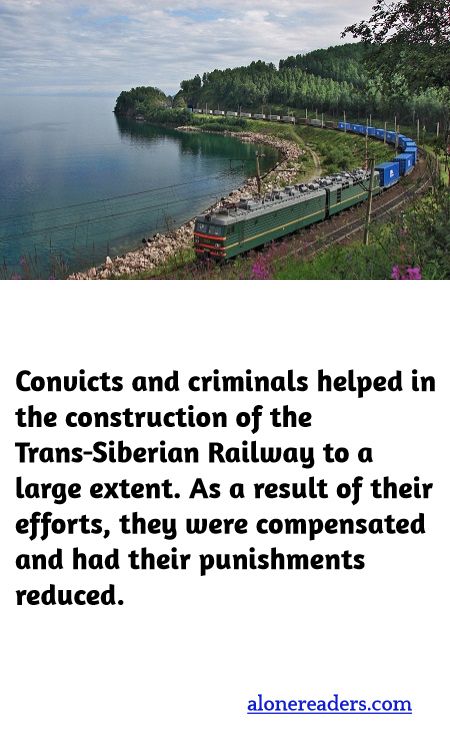
The construction of the Trans-Siberian Railway, one of the most ambitious engineering projects of the late 19th century, was notably aided by the labor of convicts and criminals. Spanning more than 9,000 kilometers and connecting Moscow to Vladivostok, the railway was crucial for the expansion of Russian territories in Asia. The use of convict labor in major state projects was not uncommon in Tsarist Russia, as it provided a solution to labor shortages while also serving as a form of punishment and control.
Convicts and criminals were mobilized to work on the railway under harsh and often life-threatening conditions. They were tasked with grueling work such as clearing dense forests, constructing bridges, and laying tracks across desolate and harsh terrains, including the vast Siberian wilderness. The labor was physically demanding and the workers battled extreme temperatures, disease, and inadequate food and shelter. Despite these adversities, their contribution to the railway’s construction was significant, accelerating the progress of this monumental project.
In recognition of their efforts, these convict laborers received certain compensations. One of the primary forms of compensation was the reduction of their sentences. Depending on the amount of work and the duration of their service on the railway construction, a prisoner's sentence could be substantially decreased. This not only served as an incentive for the convicts to participate in the labor but also facilitated the state's ability to manage and reduce its prisoner population.
However, while the reduction of sentences was a significant compensation, it is critical to view it within the context of the overall conditions these workers faced. The benefits they received hardly offset the extreme hardships and the high mortality rates among the laborers. The use of convict labor on such a massive scale also raises ethical questions regarding the exploitation of this vulnerable population for state projects.
In conclusion, while the construction of the Trans-Siberian Railway stands as a testament to engineering triumph and strategic foresight, it also reflects the complexities and ethical challenges of using convict labor in major national projects. The convicts’ part in building this iconic railway not only facilitated their own sentence reductions but also played a crucial role in binding the vast Russian empire more tightly together through steel rails. Nevertheless, the human cost of this endeavor remains a critical aspect of its history.
