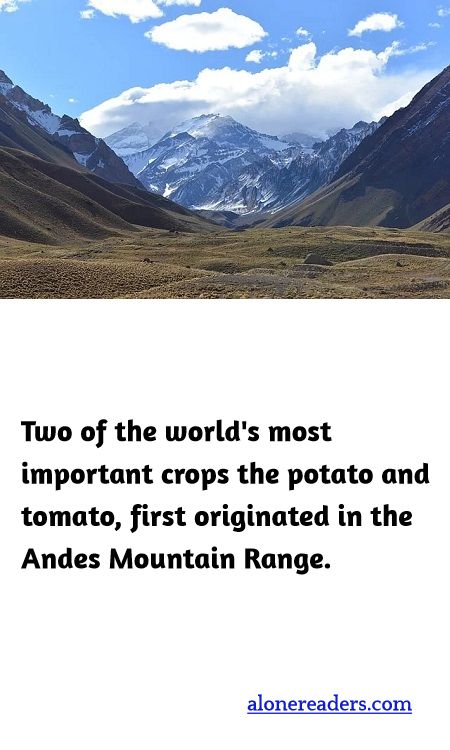
The potato and tomato, two staples in global cuisine, both have their origins in the Andes Mountain Range, a remarkable testament to the agricultural heritage of this South American region. The potato was first domesticated by the indigenous peoples of the Andes over 7,000 years ago. This tuberous crop quickly became an integral part of the Andean diet due to its adaptability to diverse climates and altitudes, as well as its ability to be stored for long periods. Today, the potato is one of the world’s largest food crops, with countless varieties cultivated across the globe.
Similarly, the tomato, although often associated with Italian cuisine, is originally from the Andes. It was first cultivated by the indigenous peoples of this region who used it for its culinary versatility and nutritional value. Tomatoes were brought to Europe in the 16th century by Spanish colonizers, and their popularity slowly spread across the globe. Today, tomatoes are a fundamental component in many culinary dishes worldwide, celebrated for their rich flavors and health benefits.
The introduction of these crops to the rest of the world has had a profound impact on global diets and agriculture. The potato, for instance, was key to the agricultural and population expansions in Europe and North America. In Ireland, the dependency on potatoes infamously led to a devastating famine when the crop failed in the mid-19th century due to disease. Meanwhile, the tomato has become so integral to various cuisines around the world, from American to Mediterranean, that it's hard to imagine cooking without it.
The journey of potatoes and tomatoes from the Andes to the rest of the world is a prime example of the globalization of food and how intercultural exchanges can reshape diets. These crops not only adapted to new environments but also significantly influenced the culinary traditions and agricultural practices of the societies that adopted them. This agricultural migration underscores the importance of indigenous practices and the profound influence they have on global food security and cultural identity. As we continue to face global challenges like climate change and population growth, understanding and preserving the origins of crops like the potato and tomato is more important than ever.
