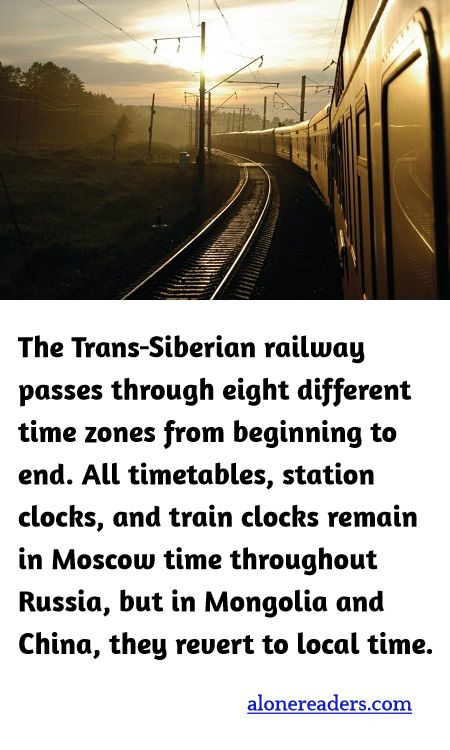
The Trans-Siberian Railway, one of the most iconic rail journeys globally, is unique not only for its vast length, which spans the Eurasian continent, but also for its operation across multiple time zones. While this might sound like a scheduling nightmare, it has a practical approach: throughout its course in Russia, all operations including station clocks, timetables, and the clocks on the trains themselves adhere strictly to Moscow time. This decision keeps the schedule uniform and avoids confusion among passengers and staff regarding train timings as it traverses across eight different time zones.
When the railway continues into Mongolia and China, the uniformity of Moscow time is replaced by the local time settings of each region. This switch is crucial for maintaining sync with the local transport systems and for the convenience of the passengers disembarking or joining from these parts of the world. It's fascinating to see how railway operations adapt to such geographical and temporal challenges.
Despite these changes in timekeeping, the journey remains seamless. The railway itself is a marvel of engineering and planning, covering almost 9,300 kilometers, and offering a window into the changing landscapes, cultures, and time zones of Russia, Mongolia, and China. The Trans-Siberian Railway not only connects territories but also provides a historical narrative of the regions it passes through, making it a lifetime journey many eagerly anticipate experiencing.
