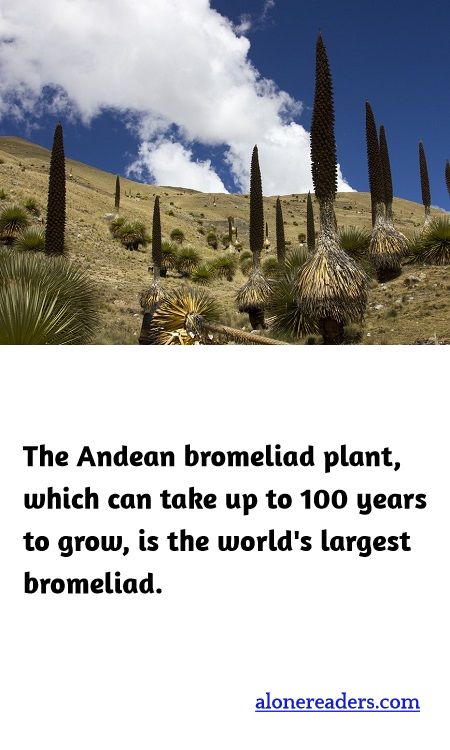
The Andean bromeliad, one of the most unique and spectacular plants in the plant kingdom, is not only a testament to longevity but also a showcase of ecological marvel. This giant among the bromeliads, known scientifically as Puya raimondii, is famed for not just its size but also its incredibly slow growth cycle, often taking up to a century to reach maturity. Native to the high Andes of Bolivia and Peru, these plants thrive in harsh, rocky environments at elevations of 3000 to 4800 meters, which is just one of the factors contributing to their lengthy development period.
Remarkably, the Andean bromeliad can grow up to 3 meters in height, but its most awe-inspiring feature is the towering flower spike it produces, which can reach up to 10 meters tall. This spike is densely packed with thousands of flowers, capable of producing millions of seeds, ensuring the continuation of the species. The blooming of this spike is a rare event and often signals the end of the plant’s life cycle, which adds a layer of poignancy to its natural grandeur.
The slow growth rate and the specific climatic and geographical requirements make the Andean bromeliad not just rare but also highly sensitive to changes in its environment. As such, it serves as an indicator of ecological health in the high Andean regions. However, this also means that it is vulnerable to climate change and habitat disruption. Its reliance on specific pollinators, like hummingbirds and possibly bats, for reproduction, further intertwines its fate with the health of its ecosystem.
The longevity and size of the Andean bromeliad, coupled with its spectacular flowering event, make it a subject of fascination and reverence. This plant is not only a beautiful example of nature's wonder but also a crucial part of its native highland ecosystems. Conservation efforts are vital to ensure that this impressive species does not fade into extinction, preserving its majestic presence in the Andes for future generations to admire.
