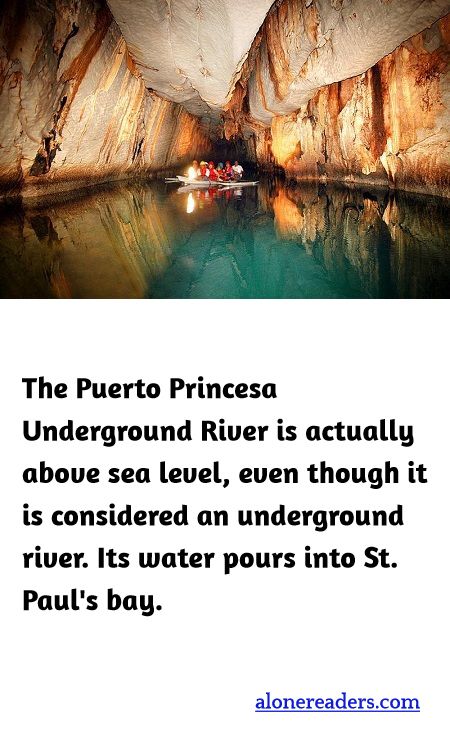
The Puerto Princesa Subterranean River in the Philippines presents a fascinating case of natural wonder and geological intrigue. Contrary to what its name might suggest, this river is indeed above sea level, an aspect that might seem counterintuitive to its classification as an underground river. Nestled on the northern coast of the island of Palawan, the river runs through a remarkable limestone karst mountain landscape before flowing directly into the St. Paul’s Bay at the West Philippine Sea.
This unique river stretches over 8.2 kilometers and is navigable by boat for up to 4.3 kilometers from its mouth. This makes it one of the longest navigable underground rivers in the world, a characteristic that has garnered it a spot on the list of New7Wonders of Nature in 2012. Its entire course is enveloped by an intricate system of caves featuring large chambers, significant geological formations, and several species that are adapted to the dark, enclosed environment. The presence of bats, swiftlets, and various invertebrates highlights the river's role as a thriving habitat distinct from its terrestrial surroundings.
What adds to the allure of the Puerto Princesa Underground River is its contribution to our understanding of karst landscapes. These formations are created by the dissolution of soluble rocks, including limestone, which results in unique landforms and underground streams. Despite being above sea level, the river has carved out subterranean channels and caverns that remain filled with water, owing to the area's topography and hydrogeology.
As water from the river pours into St. Paul's Bay, it underscores the intricate connection between the inland karst landscapes and the coastal marine ecosystems. This mingling of freshwater with saltwater creates a dynamic habitat rich in biodiversity, including mangrove forests that are often teeming with life. The Puerto Princesa Underground River remains a site of paramount environmental significance and a vivid reminder of nature’s artistry in sculpting the earth’s surface. As such, it continues to be a prime focus for conservation efforts, tourism, and educational initiatives aimed at understanding and preserving unique natural environments.
