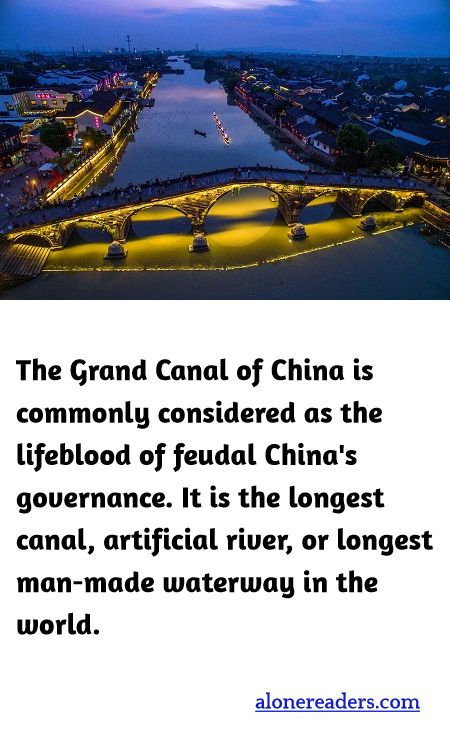
The Grand Canal of China, an engineering marvel, has been pivotal in shaping the country's history, culture, and economy. Stretching over an impressive distance, it holds the title for the longesst canal, artificial river, or man-made waterway in the world and has been essential to the governance of feudal China, serving as a critical conduit for the transport of grain, raw materials, and troops between the economic powerhouse of the Yangtze River basin and the political capitals in northern China.
Constructed in sections from the 5th century BC onwards, the Grand Canal was most prominently developed during the Sui Dynasty between 581 and 618 AD. This period saw the unification of the northern and southern parts of China, under Emperor Yang Guang, who mandated the linking of the existing disjointed segments into one continuous route. This mega-project was not just an economic endeavor; it was also a bold political move, aimed at consolidating and extending imperial control.
The canal stretches from Beijing in the north to Hangzhou in the south, measuring over 1,700 kilometers long. It passes through several of China’s most vital provinces, serving as a backbone for the agricultural, economic, and military logistics of ancient and medieval China. Historically, it facilitated the annual grain tribute system from the fertile Yangtze River valley to feed the massive populations in the northern regions and the imperial courts.
Throughout its history, the Grand Canal has contributed to the cultural integration within China. It has been a melting pot for different ethnic groups, languages, and cultures, promoting exchanges and interactions that have enriched Chinese civilization. It also inspired countless literary and artistic works.
Despite its age, the Grand Canal continues to be a significant waterway in modern China, playing a crucial role in shipping and water management. It has been adapted to contemporary needs, contributing to regional economic development and integration. Recognized for its historical value and profound cultural implications, the Grand Canal was designated a UNESCO World Heritage Site in 2014, ensuring that its historical significance and contribution to Chinese heritage and the world will not be forgotten.
