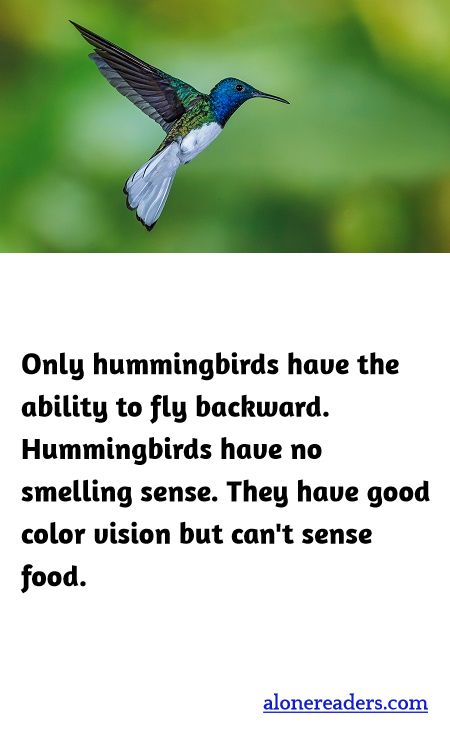
Hummingbirds, those vibrant, tiny birds that flit about with seemingly boundless energy, possess a unique flight capability not found in other birds: the ability to fly backwards. This remarkable skill is facilitated by their incredibly flexible wing joints, allowing their wings to rotate almost 180 degrees in all directions. This enables them to hover precisely in place and maneuver backwards with ease, which is particularly useful when backing out of a flower after feeding on nectar.
Despite their brilliance in flight and vision, hummingbirds lack the sense of smell. This might seem like a disadvantage, but these birds more than compensate with their acute vision. Their eyes are highly adapted to detect colors, including some in the ultraviolet spectrum which are invisible to the human eye. This trait is crucial since it helps them locate flowers and feeders not by their scent, but by their vibrant hues. Interestingly, while they have stellar vision that helps them in finding food and navigating, hummingbirds do not have a great sense of food itself. Their feeding habits are primarily triggered by sight rather than taste.
The lives of hummingbirds revolve significantly around their search for nectar, which they need to consume in vast quantities relative to their size to support their high-energy lifestyle. They can visit hundreds of flowers in a single day. Furthermore, these birds also play a crucial role in pollination. As they move from flower to flower, they inadvertently carry pollen on their heads and bodies, helping plants reproduce. This ecological role underscores the importance of hummingbirds beyond their aesthetic and scientific appeal.
In summary, while they may not have a sense of smell or a strong ability to sense food flavors, hummingbirds are fascinating creatures perfectly adapted to their colorful, energetic lives. Their unique ability to fly backward and their reliance on visual cues to find nectar make them one of nature's most intriguing avian species, showcasing the diverse and incredible adaptations of wildlife.
