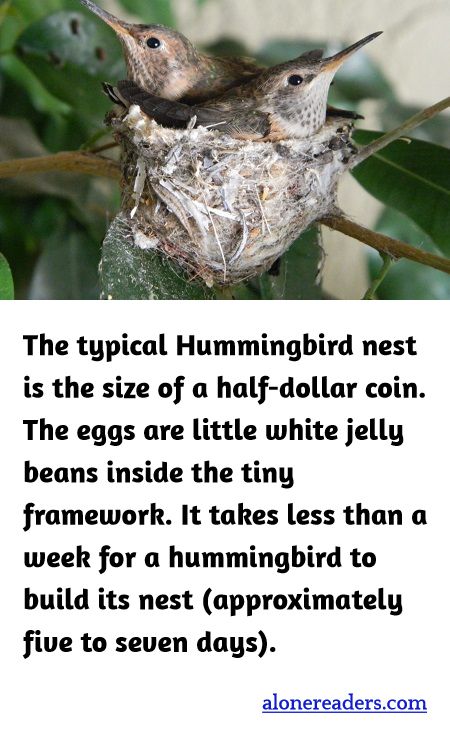
Hummingbirds, those mesmerizingly tiny birds known for their incredible flying abilities and love for nectar, are equally fascinating when it comes to their nesting habits. A typical hummingbird nest is astonishingly small, roughly the size of a half-dollar coin. This compact creation showcases the meticulous craftsmanship of its builders, who manage to fashion it in just five to seven days. Constructed primarily from soft plant fibers, moss, and down, these nests are often bound together with spider silk, which allows the nest to expand as the young hummingbirds grow.
The eggs found within these delicate structures are akin to little white jelly beans, tiny and fragile. Typically, a hummingbird will lay only two eggs per breeding cycle, each requiring about two to three weeks of incubation. These eggs are among the smallest bird eggs in the world, a perfect fit for their diminutive nest.
Despite their size, hummingbird nests are robust and meticulously engineered to withstand the elements. They are commonly located on the branches of trees or shrubs, sometimes even on loops of chain or wire. The location is strategically chosen to provide shelter from predators and harsh weather conditions, demonstrating the hummingbird’s innate sense for survival and adaptation.
The construction of a hummingbird nest is a testament to the remarkable instinct and skill of these birds, embodying a level of precision and care that ensures the survival of their species. By crafting such an intricate and sturdy home in just under a week, hummingbirds not only secure a site for their young to mature but also contribute to the delicate balance of their ecosystems.
