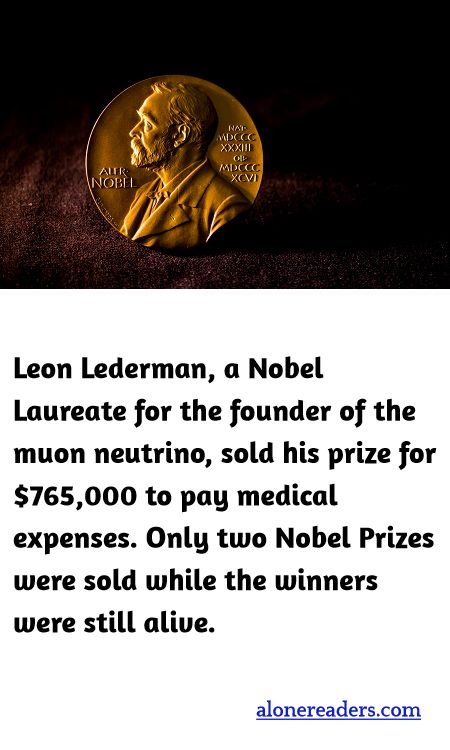
Leon Lederman, a distinguished physicist who won the Nobel Prize in 1988 for his contributions to the discovery of the muon neutrino, made headlines in a less celebratory fashion when he decided to sell his Nobel Prize medal. The decision was driven by the financial burden of medical expenses. Lederman’s medal fetched $765,000 at an auction, illustrating not only the value of the prize but also the price the acclaimed scientist had to pay in face of health-related adversities.
This event throws light on a poignant intersection of achievement and necessity. Nobel Prizes are often seen as the pinnacle of a scientist's professional achievements, a symbol of a lifetime of dedication and intellectual contribution. However, Lederman’s situation underscores a harsh reality faced by many, even those at the peaks of their careers. It highlights a significant and often overlooked issue regarding the financial uncertainties that can accompany aging and illness, especially in systems where healthcare costs can be prohibitive.
Interestingly, Lederman’s case is one of the very few where Nobel Prizes were sold by the laureates while they were still alive; only two such instances have been recorded. This rarity points to the exceptional circumstances under which Nobel laureates would part with a symbol so reflective of their legacy. The sale of these medals, therefore, opens up a broader discourse on the valuation of scientific accomplishments versus personal exigencies.
The episode serves as a stark reminder of the vulnerabilities that persist despite professional accolades or achievements. It also potentially invites a discussion about the support structures and safety nets available to the intellectuals and pioneers in various fields, who have contributed significantly to societal progress through their work. In Lederman’s case, the decision to auction his Nobel Prize was a confluence of personal need and systemic demands, a poignant insight into how even the most celebrated minds are not immune to the vicissitudes of life.
