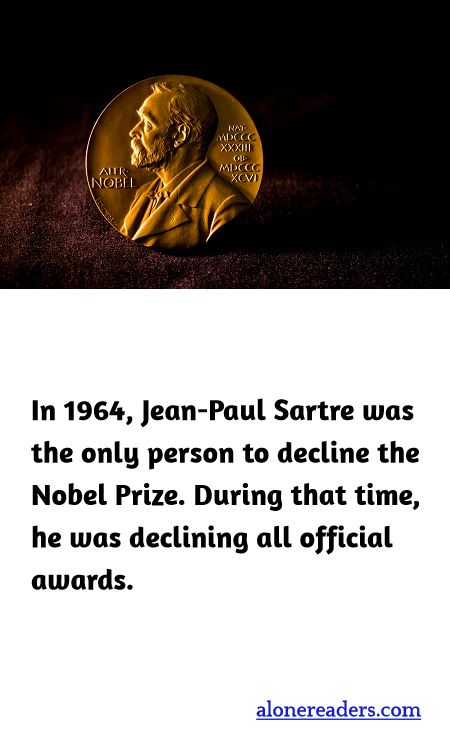
In 1964, Jean-Paul Sartre made headlines not just for his philosophical and literary prowess but also for his unprecedented decision to decline the Nobel Prize in Literature. This radical choice marked him as the first and only laureate to voluntarily refuse this prestigious award. Sartre, a leading figure in existential philosophy and a prominent intellectual in post-war France, had a deep-seated aversion to official honors and the institutional validations they represented. He believed that such recognitions could limit a writer’s freedom and independence, potentially influencing their voice and compromising their integrity.
Sartre’s decision was rooted in his philosophy and his views on society's structures. He was wary of being absorbed into a system he often critiqued. Accepting the Nobel Prize, in his view, would align him with certain ideological stances and institutions that he might oppose. Moreover, Sartre was concerned with how the prestige of the Nobel could affect his relationship with his readers, fearing it might place him on a pedestal and create a barrier. His refusal was a statement in alignment with his existential beliefs, particularly the notion that individuals must create their own paths free from external definitions or constraints.
His rejection of the Nobel Prize was not without controversy and led to a significant amount of discourse on the role of intellectuals in society, the purpose of awards, and the freedom of the artist. While some criticized his decision as pretentious or overly idealistic, others applauded his commitment to his principles and his courage to stand against what he viewed as a form of institutional control over intellectuals and artists.
Though he declined the prize, the Nobel Committee noted that the prize itself was still awarded to him, regardless of his rejection—it was merely unaccepted. In the years that followed, Sartre continued to be a prolific writer and thinker, his works and his actions continuing to spark discussion and influence various domains of philosophy, literature, and political activism. His decision to decline the Nobel Prize remains a significant part of his legacy, exemplifying his lifelong dedication to freedom of thought and resistance to conformity.
