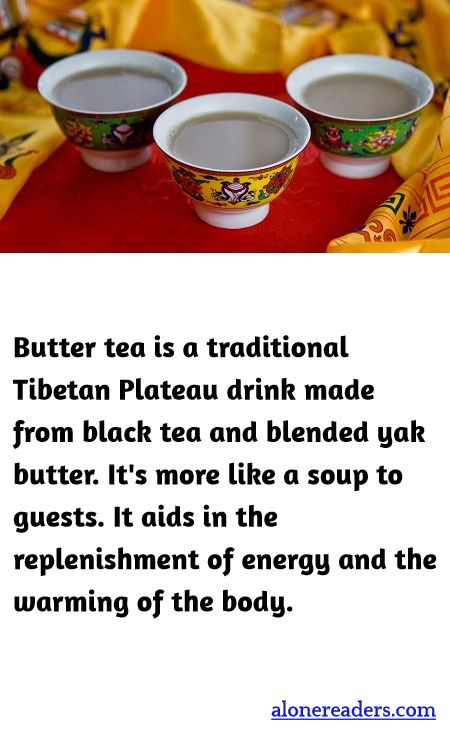
Butter tea, also known as Po Cha in Tibet, is a distinctive and cherished beverage that has been a staple in the high altitudes of the Himalayas for centuries. Originating from the Tibetan Plateau, this drink is a unique blend of brewed black tea, salt, and yak butter. The tea used is typically a strong, semi-fermented variety such as Puerh, which is boiled for several hours to extract maximum flavor. The brew is then churned together with yak butter and salt in a special container, traditionally a wooden churn called a ‘chandong’.
The result is a creamy, rich concoction that is more akin to a soup than what most would recognize as tea. Its nutritional profile makes it particularly suited to the harsh, cold climate of the Tibetan region. The high caloric content of the yak butter provides essential energy needed to thrive at high altitudes, while the tea itself helps to keep the body hydrated. Sodium from the added salt helps to replenish electrolytes lost in the cold, dry air.
Butter tea plays a significant role in Tibetan culture, served during many social occasions such as weddings, festivals, and religious ceremonies. It is a symbol of hospitality, typically offered to guests upon arrival. Drinking butter tea is a daily ritual for many Tibetans, often enjoyed several times throughout the day to maintain hydration and energy levels.
Furthermore, butter tea holds a place in the traditional Tibetan medicine system. It is believed to support digestive health and prevent chapped lips, which are common in the windy, arid climate. The drink also functions as a warming agent, helping to stave off the bone-chilling cold that can prevail in the mountainous regions.
For travelers and visitors, trying butter tea can be an intriguing aspect of exploring Tibetan culture. Its salty, buttery flavor may be an acquired taste, but it offers a direct connection to the lives and traditions of the Tibetan people. Whether sipping it in a local's home or at a monastery, experiencing butter tea is a way to gain insight into the resilience and hospitality characteristic of this high-altitude community.
