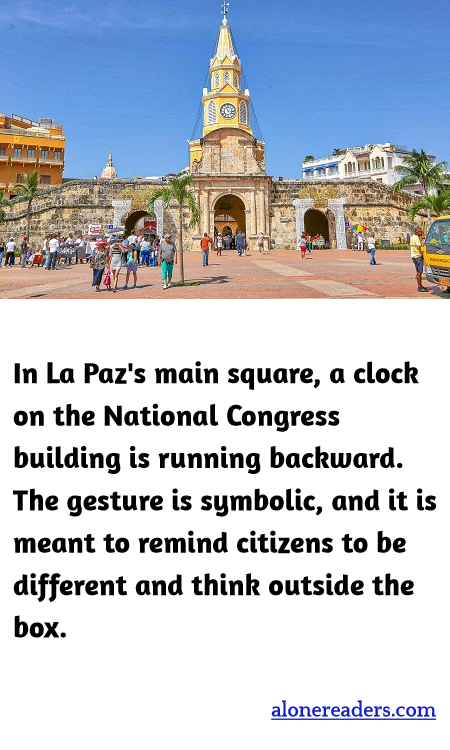
In the heart of La Paz, the capital of Bolivia, a curious and compelling sight captivates both locals and tourists alike: a clock on the National Congress building famously runs backward. This unique timepiece isn't merely a malfunction or design flaw, instead, it serves as a potent symbol of individuality and innovative thinking, encouraging onlookers to challenge conventional norms. Installed prominently on the façade of one of the most significant political buildings in Bolivia, this backward clock underlines a broader cultural message evident in many aspects of Bolivian life – to stand out and think differently.
The decision to reverse the clock’s direction wasn't taken lightly; it was a calculated move by the Bolivian government aimed at fostering a national identity that embraces uniqueness and creativity. In a world where western norms and practices are often adopted uncritically, Bolivia’s backward clock serves as a reminder to its citizens and the international community of the value of introspection and the reconsideration of established methods. It symbolizes a break from the past and a rethinking of time, tradition, and progress.
The backward clock also alludes to the concept of reclaiming heritage and viewing time from a non-Western perspective. It prompts a discourse on how societies measure progress and success, urging onlookers to ponder whether moving in the traditional ‘forward’ direction is always the most positive trajectory. In the bustling ambiance of La Paz's main square, the clock intrigues passersby, sparking conversations among viewers from diverse backgrounds about the essence of progress and innovation in societal development.
Moreover, this peculiar timepiece is a declaration of Bolivia’s autonomy and its bold approach to politics and culture. By literally reversing the flow of time as most of the world knows it, Bolivia asserts its sovereignty and philosophical stance, standing as a beacon of difference in a homogeneous world. Thus, the backward-running clock on the National Congress building isn’t just a local curiosity; it is a profound statement of identity, originality, and the courage to invert traditional paradigms in search of new solutions and perspectives.
In essence, Bolivia’s backward clock is much more than an unusual attraction. It is a symbolic call to action for innovation and critical thinking. As the hands of the clock move counterclockwise, they unwaveringly point out the necessity for societies to occasionally take a step back to reflect, rethink, and possibly advance in an entirely new direction. Through this bold symbolic gesture, Bolivia champions a culture of distinctive thinking and reminds the world of the profound impacts of viewing usual things through an unusual lens.
