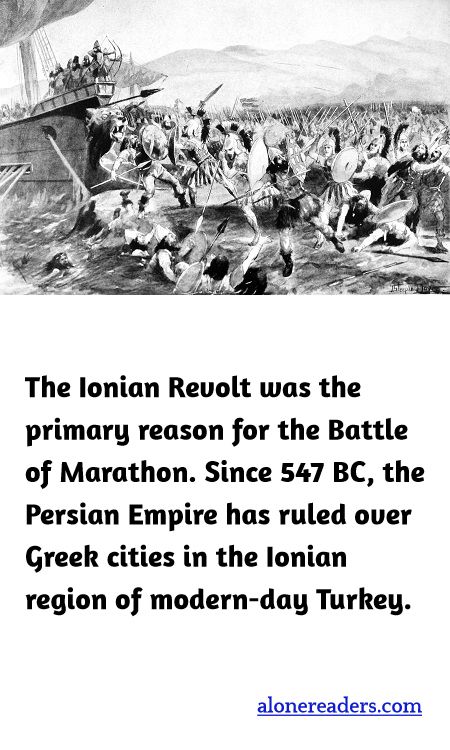
The Ionian Revolt, which occurred between 499 BC and 493 BC, marked the beginning of the Greco-Persian Wars and set the stage for several pivotal battles, including the Battle of Marathon in 490 BC. The roots of the revolt lie in the Persian Empire's control over the Ionian cities along the coast of modern-day Turkey from as early as 547 BC, when Cyrus the Great subjugated these Greek city-states.
Under Persian rule, the Ionians were forced to pay heavy taxes and serve in the Persian army, leading to widespread discontent. The revolt began when Aristagoras, the tyrant of Miletus, failed to conquer the island of Naxos with Persian support. Fearing retribution from Darius the Great, the Persian king, Aristagoras incited his city and other Ionian cities to rebel. The revolt quickly spread, attracting support from other Greek city-states, including Athens and Eretria, illustrating the complex network of alliances and animosities that characterized ancient Greek politics.
The Ionians and their allies had some initial successes, including the noteworthy capture and burning of Sardis, one of the major Persian regional capitals. However, the Persian Empire's military might gradually overwhelmed the insurgents. By 493 BC, the revolt had been decisively crushed by Darius’s forces, with Miletus being besieged and destroyed, serving as a harsh example to other subjugated states.
The suppression of the Ionian Revolt fueled a burning desire for revenge against Athens and Eretria, who had supported the revolt. This led Darius to embark on an expedition against mainland Greece, culminating in the Battle of Marathon in 490 BC. At Marathon, a vastly outnumbered Athenian army managed to defeat the Persian forces, a victory that marked a turning point in the conflict between Greece and the Persian Empire.
The Battle of Marathon and the events of the Ionian Revolt thus highlight the profound impacts of colonial resentment and the struggle for autonomy in ancient times. These conflicts not only reshaped Greek and Persian relations but also demonstrated the effectiveness of Greek hoplite tactics, which played a crucial role during the battles of the Persian Wars. The motivations, alliances, and outcomes of these early conflicts directly influenced the strategies and identities of the various city-states involved, and their legacy can be traced in the later, more famous battles of Salamis and Plataea.
