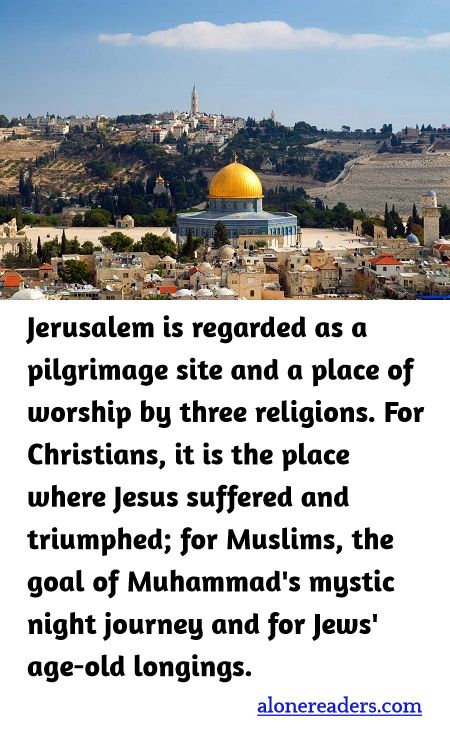
Jerusalem, a city steeped in spiritual significance, stands as a focal point for the devotional paths of three major world religions: Judaism, Christianity, and Islam. Each faith views the city through a prism of profound historical and theological importance, contributing to its complex and often contentious status on the global stage.
For Christians, Jerusalem is the setting of some of the most pivotal events in the life of Jesus Christ. It is here that the Last Supper, the Crucifixion, and the Resurrection took place — events that are foundational to Christian faith and worship. These sites, such as the Church of the Holy Sepulchre, draw countless pilgrims each year who come to walk the Via Dolorosa, the path that Jesus is believed to have walked on the way to his crucifixion.
Muslims revere Jerusalem as the site of the Al-Aqsa Mosque, which encompasses the entire Haram al-Sharif, or the Noble Sanctuary. This location is deeply significant as it is believed to be the destination of the Prophet Muhammad's night journey from Mecca, followed by his ascension into heaven, a miraculous event chronicled in the Quran. This makes Al-Aqsa the third holiest site in Islam, a place for worship and contemplation.
For Jews, Jerusalem is irrevocably tied to their identity and faith. It is the site of the ancient temple built by King Solomon, as described in the Hebrew Bible. The Western Wall, a remnant of the Second Temple, represents the holiest accessible site where Jews can pray. Moreover, Jerusalem is not just a historical or ritualistic site, but a focus of yearning and spiritual return, central to Jewish prayers and festivals.
The overlapping sacral claims to Jerusalem are not just a matter of personal or communal faith but have significant political and cultural implications. The city embodies both unity and division, a place of peace and conflict testified by its tumultuous history. This convergence of faiths and the ongoing contention illustrates the profound influence that Jerusalem holds over billions of adherents across the world.
Despite its contested status, the city remains a beacon for pilgrims from these religions and beyond, all drawn by its deep historical roots and the continuing call for coexistence and mutual respect among its diverse worshippers. As Jerusalem stands resilient through the ages, it continues to offer a testament to the enduring power of faith, the complexity of human history, and the unceasing hope for reconciliation amidst diversity.
