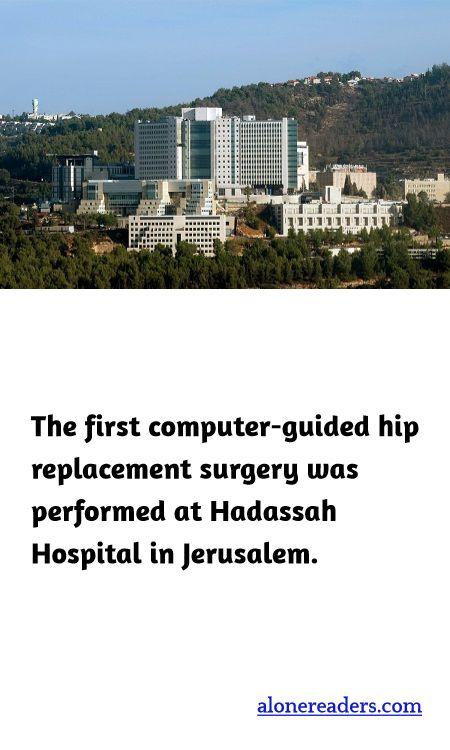
In a remarkable milestone in medical technology, the first computer-guided hip replacement surgery was successfully performed at Hadassah Hospital in Jerusalem. The pioneering procedure marks a significant advancement in the field of orthopedic surgery, potentially setting new standards for precision and outcomes in hip replacement operations.
Traditionally, hip replacement surgeries have been performed manually by surgeons, relying heavily on their experience and skill to align and place the prosthetic hip components. While outcomes are typically good, there remains a margin for human error which can lead to complications such as misalignment, leading to pain or the need for additional corrective surgeries.
The introduction of computer-guided technology in surgeries, particularly in joint replacement, heralds a new era where surgeons can achieve near-perfect alignments and placements, thanks to real-time 3D imaging and computer algorithms. This technology provides surgeons with a detailed map of the patient's anatomy, allowing for extremely precise surgical planning and execution. This helps minimize the risk of post-operative complications and increases the likelihood of a successful outcome.
During the groundbreaking procedure at Hadassah Hospital, the surgical team used a sophisticated computer system that guided the robotic tools. This technology ensured that the artificial hip was positioned with optimal accuracy, potentially improving the longevity of the implant and the overall function of the hip joint.
The success of this surgery not only demonstrates the potential improved outcomes for patients but also may reduce recovery times. Faster recoveries would be a result of less invasive procedures and more accurate implant placements, meaning tissues and muscles around the hip are less disrupted during the operation.
As technologies like these continue to evolve and become more widely adopted, it could usher in a new standard in various types of surgical procedures. The innovative use of computer-guided systems in hip replacement surgeries at Hadassah Hospital exemplifies the significant benefits of integrating advanced technology in medical procedures. This successful operation might encourage other medical institutions worldwide to adopt similar technologies, ultimately improving surgical outcomes and patient quality of life on a global scale.
