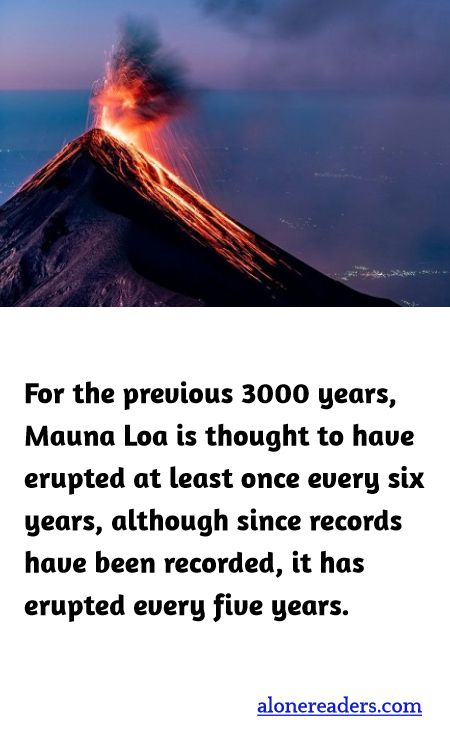
Mauna Loa, one of the largest volcanoes on Earth, has an eruptive history as monumental as its size. Situated in Hawaii, it poses not only a significant geological interest but also a considerable impact on the local environment and communities. Historical data suggests that for the past 3000 years, Mauna Loa has erupted on average at least once every six years. This frequency highlights the dynamic and active nature of the volcano.
Since the onset of more systematic and scientific record-keeping, observations indicate that Mauna Loa has erupted approximately every five years. These eruptions vary in their intensity and scale but are a crucial part of the natural processes that shape the Hawaiian Islands. Each eruption contributes to the growth of the island, adding new layers of lava rock that eventually become fertile ground for a rich ecosystem.
The regular activity of Mauna Loa presents unique challenges and opportunities. On one hand, the volcanic activity can pose risks to human life, property, and infrastructure. Residents and authorities have to stay vigilant and prepared for potential evacuations and disruptions. On the other hand, the eruptions are a draw for scientists and tourists alike, providing unparalleled opportunities to study volcanic processes and witness the raw beauty of nature's power.
The predictability of Mauna Loa's eruptions also plays a critical role in disaster preparedness. The United States Geological Survey (USGS) closely monitors the volcano for signs of impending eruptions. This monitoring helps to provide timely warnings to residents and minimize the impact on human life and property.
Understanding the eruptive patterns of Mauna Loa is essential for both scientific knowledge and practical safety. Continued study helps refine our predictions and improves our ability to coexist with one of nature’s most formidable forces. The regularity of Mauna Loa's activity serves as a reminder of the ever-changing planet and the need to respect and adapt to its rhythms.
